In a significant escalation of its sanctions enforcement campaign, the United States has captured a second vessel linked to Venezuela's so-called "dark fleet" of oil tankers. The operation, conducted in international waters, signals Washington's hardening stance against illegal oil networks supporting Caracas and its allies.
Pre-Dawn Interception of the M/T Sophia
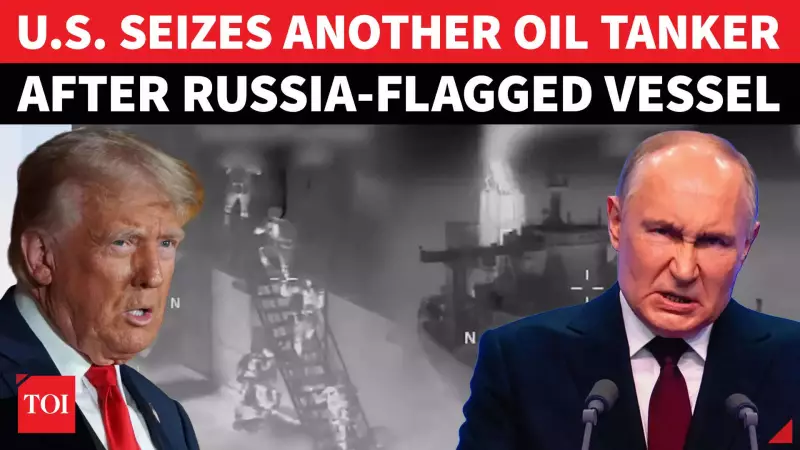
According to the U.S. Southern Command, the sanctioned oil tanker M/T Sophia was seized during a coordinated pre-dawn operation on January 8, 2026. The stateless vessel was intercepted without any reported incident. Officials stated that the ship was operating in "dark mode," a tactic used to evade detection by turning off transponders, and was involved in illicit activities across the Caribbean region.
The U.S. Coast Guard is now escorting the captured tanker to the United States for what authorities term "final disposition." This seizure follows the recent capture of a Russian oil tanker, part of a broader strategy to disrupt the flow of oil revenue to the Venezuelan government of Nicolas Maduro, which remains under heavy U.S. sanctions.

Washington's Hardline Approach and Global Fallout
This latest action underscores the Trump administration's commitment to a hardline approach in enforcing economic sanctions. The move is designed to cripple the complex networks that allow Venezuela to export its oil despite stringent international restrictions. The "dark fleet" consists of vessels that use obscure ownership and deceptive shipping practices to trade sanctioned commodities.
The seizure has triggered a sharp international response. Reports indicate that Russian President Vladimir Putin "erupted in anger" following the capture of the vessels, highlighting the geopolitical tensions surrounding Venezuela's alliances. The operation also comes in the context of heightened unrest in Venezuela, following the earlier reported capture of President Nicolas Maduro by U.S. forces, an event that led to significant casualties and widespread protests in Caracas.
Broader Implications for Sanctions and Trade
The successful interception of the M/T Sophia demonstrates the expanding reach and capability of U.S. maritime enforcement. It sends a clear warning to shipowners, insurers, and facilitators involved in the clandestine oil trade. For India, a major global energy consumer, such enforcement actions contribute to volatility in global oil markets and underscore the risks associated with trading in sanctioned commodities.
Analysts suggest that these aggressive tactics may force a recalculation by entities aiding Venezuela, potentially leading to greater compliance with U.S. sanctions. However, they also risk further escalating diplomatic confrontations with nations like Russia and China, who have opposed U.S. policy towards Venezuela.
The continued focus on Venezuela's oil networks indicates that disrupting this financial lifeline remains a top priority for U.S. foreign policy, with maritime seizures becoming a key tool in this ongoing economic pressure campaign.