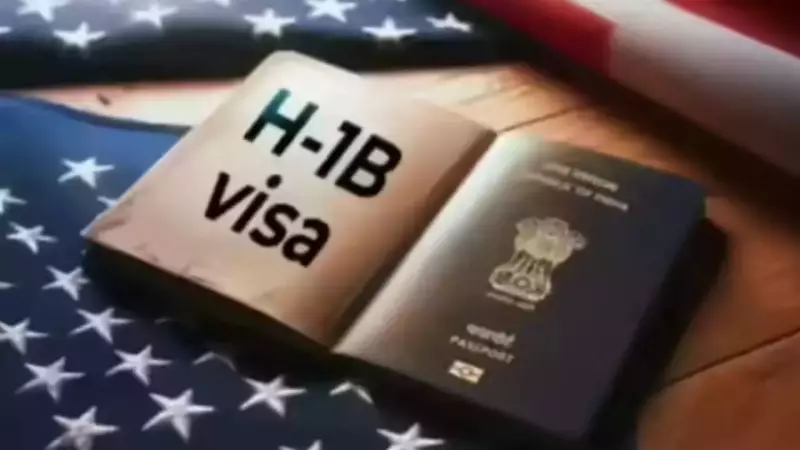
In a move that could significantly impact thousands of Indian professionals, Republican Congresswoman Marjorie Taylor Greene has introduced legislation in the US House of Representatives aiming to abolish the H-1B visa program entirely. The bill, designated HR 6937, was filed on January 2 and seeks to amend the Immigration and Nationality Act to eliminate this key pathway for skilled foreign workers.
What the Bill Proposes and Its Direct Impact on India
The legislation proposes to terminate the H-1B visa category, a non-immigrant visa that allows US companies to employ foreign workers in specialty occupations. Data underscores the high stakes for India. According to a US Citizenship and Immigration Services (USCIS) report, a staggering 71% of all H-1B applications approved in fiscal year 2024 were for Indian nationals. This translates to approximately 2.8 lakh (280,000) approvals for Indian beneficiaries.
Chinese nationals were a distant second, accounting for roughly 47,000 approvals, or just 12% of the total. While the bill's current text lacks details on transitional arrangements for existing visa holders, its passage, however unlikely, would directly affect the future of countless Indians aspiring to work in the United States.

Greene's Rationale and the Political Context
Congresswoman Greene, representing Georgia, has been a long-time critic of the H-1B system. She argues that the program undermines American workers by allowing companies, especially in the technology sector, to hire foreign labour at lower wage levels, leading to what she calls "outsourcing and wage suppression."
In statements released with the bill, Greene framed it as a necessary step to protect US jobs, claiming corporations have abused the program by prioritizing profits over people. This legislative push comes during a turbulent period in her career, marked by a public falling out with former President Donald Trump and her subsequent resignation from the House, effective January 5.
Legislative Process and Expert Outlook
Following its introduction, the bill was immediately referred to several House committees for initial review, including the Judiciary, Energy and Commerce, and Ways and Means committees. Immigration experts widely agree that the bill has a very slim chance of becoming law, given the current political dynamics and the program's entrenched role in the US economy.
However, its introduction has successfully ignited a fresh debate on the future of the H-1B program. The move highlights ongoing tensions in US immigration policy between the demand for global talent in critical industries and the political pressure to safeguard domestic employment opportunities. For now, Indian professionals and the tech industry will be watching the bill's committee progress closely, though no immediate policy change is anticipated.