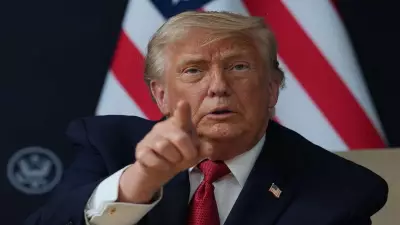
In a move that signals a potential dramatic shift in US foreign policy, former President Donald Trump has issued a stark warning to the Cuban government. He declared that under a future Trump administration, Cuba would be cut off from Venezuelan oil and financial resources, dealing a significant blow to the island nation's struggling economy.
The Core of Trump's Warning
Donald Trump's statement, made on January 11, 2026, directly targets the long-standing economic lifeline that Venezuela has provided to Cuba. For decades, Venezuela, under the leadership of the late Hugo Chavez and his successor Nicolas Maduro, has supplied Cuba with heavily subsidized oil. This arrangement is part of a strategic alliance where Cuba sends medical professionals and other advisors to Venezuela in return.
Trump's warning was unequivocal: "No more Venezuelan oil or money for them," he stated, referring to the Cuban leadership. This pronouncement underscores his intent to re-impose and potentially intensify the maximum pressure campaign on both regimes, which he pursued during his first term. The policy aims to cripple the economic cooperation that sustains both governments.

Context and the 'Venezuela Op'
The former president's comments came in the aftermath of a significant event referred to as the "Venezuela Op." While specific operational details from the source remain limited, the context suggests a major development or action concerning Venezuela that prompted this forceful response directed at Havana.
Trump's rhetoric frames Cuba as a parasitic state benefiting from Venezuela's resources while the Venezuelan people suffer under economic collapse and political oppression. His proposed strategy seeks to sever this link entirely, isolating Cuba economically to force political change. This approach marks a clear departure from the brief period of thaw seen under the Obama administration and a return to a more confrontational stance.
Potential Implications and Regional Fallout
The implications of such a policy, if implemented, would be severe for Cuba. The nation is already grappling with acute shortages of fuel, food, and medicine. Losing access to discounted Venezuelan oil could lead to deeper blackouts, cripple transportation, and worsen the humanitarian situation on the island. It would force the Cuban government to seek alternative, far more expensive sources of energy, draining its scarce foreign currency reserves.
For Venezuela, cutting off the oil-for-services exchange with Cuba would disrupt a key geopolitical partnership. It could also remove a layer of support for the Maduro government, although the primary US target remains the regime in Caracas itself. The warning also sends a clear message to other nations that might consider supporting either Venezuela or Cuba, highlighting the risks of US sanctions.
This announcement is likely to escalate tensions in the Caribbean and Latin American region. It reaffirms Trump's commitment to a foreign policy based on economic pressure and unilateral action. The statement is also seen as a key part of his 2024 presidential campaign rhetoric, aimed at appealing to voters in the critical state of Florida, home to a large and influential Cuban-American community that strongly supports a hardline approach against the Cuban regime.
As the geopolitical chessboard shifts, Trump's stark warning sets the stage for a potential new chapter of confrontation. The viability of completely severing the Venezuela-Cuba nexus remains a complex challenge, but the intent signals a firm and uncompromising posture that would define US policy towards both nations if he returns to power.