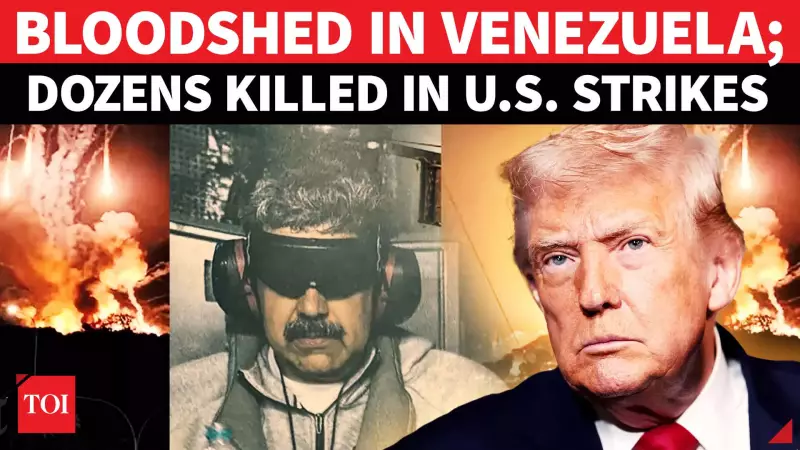
The geopolitical landscape in the Americas is witnessing intense turbulence following a series of aggressive moves and statements from the United States administration targeting Venezuela. The situation has escalated into a multi-front diplomatic confrontation, drawing sharp reactions from global powers like China and Iran, and exposing deep internal divisions within US politics.
US Pressure on Maduro Reaches a Boiling Point
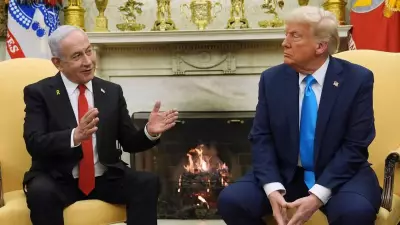
The core of the crisis revolves around the administration of former US President Donald Trump's sustained campaign against the government of Venezuelan President Nicolas Maduro. Recent reports indicate that Trump's forces have signaled the possibility of a second invasion or military action in the Americas, specifically targeting Venezuela if key figures like Vice President Delcy Rodriguez "disobey" US demands. The rhetoric is stark, with declarations that the "US IS IN CHARGE" of the situation.
This hardline stance appears to be a response to previous incidents, including an alleged US attack on a Venezuelan dock, after which Maduro was seen dancing. Reports suggest an "angry" Trump made Maduro "pay a heavy price" for this act of defiance. The tension has even touched Maduro's family, with his son, Nicolas Maduro Guerra, launching a fiery verbal assault against what he termed Venezuelan "traitors" in the wake of Trump's attacks, passionately swearing on his father's name.

Global Powers Enter the Fray
The US's unilateral approach has not gone unchallenged by other nations with vested interests. China has issued a clear warning to Trump over the handling of the Venezuela situation. Chinese leader Xi Jinping has cautioned the US against "acting like the world's cop." The warning is underpinned by substantial financial stakes, as China has an estimated $100 billion invested in Venezuela, primarily tied to oil projects. Beijing has explicitly demanded the US stop attempts at "toppling" the Maduro government, framing the crisis as an exposure of Trump's "oil game."
Simultaneously, the crisis has reverberated in the Middle East. Iranian Supreme Leader Ayatollah Ali Khamenei has reportedly made preparations, metaphorically "packing bags for Russia," as tensions with the US spike. This comes after Trump issued a severe ultimatum concerning Iran's Islamic Revolutionary Guard Corps (IRGC), threatening that the US "will hit Iran hard" if the IRGC acts against protesters. The interconnected nature of these standoffs highlights a broader pattern of US confrontation with regimes it opposes.
Domestic Repercussions and Future Implications
Within the United States, the aggressive foreign policy has exacerbated political fractures. The move has led to Democrats demanding "impeachment" proceedings against Trump, with critics claiming he "lost his mind." Furthermore, the strategy has caused a visible split within the MAGA (Make America Great Again) movement itself, indicating that the administration's actions are polarizing even its core support base.
The economic dimension remains critical. A Maduro ally fired back at US pressure, stating Venezuela "won't survive without oil," underscoring the life-or-death nature of the energy sector for the sanctioned nation. As the US flips the script by capturing and prosecuting individuals linked to the Maduro government, the first court hearing of one such individual revealed a bruised wife, adding a human rights dimension to the complex political struggle.
The convergence of these events paints a picture of a highly volatile international environment. The US's maximalist pressure on Venezuela is acting as a catalyst, triggering defensive alliances with China and Iran, while simultaneously destabilizing domestic US politics. The threat of further military action looms large, promising continued uncertainty for the region and global oil markets tied to Venezuela's vast reserves.