Trump's State of the Union Address Confronts Legal and Geopolitical Challenges
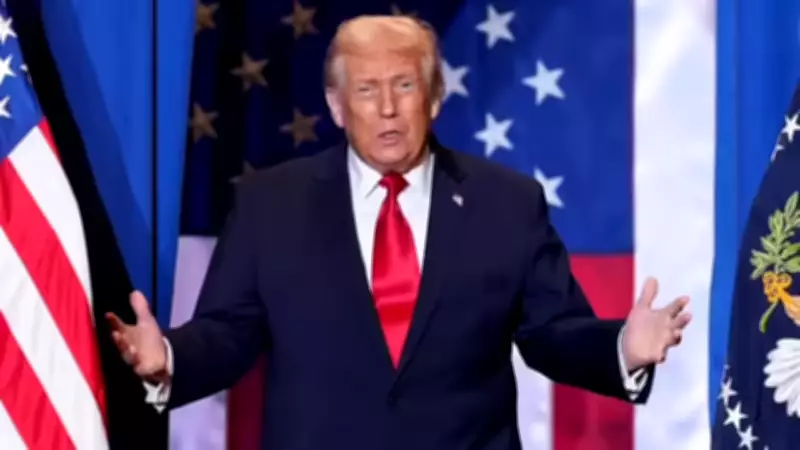
US President Donald Trump is set to address a joint session of Congress on Tuesday, delivering his State of the Union speech at a politically sensitive moment. The prime-time televised address comes as the Supreme Court has invalidated his sweeping global tariff regime, a key element of his economic agenda, and tensions with Iran escalate over nuclear concerns.
Supreme Court Ruling and Economic Agenda in Focus
Days before the speech, the Supreme Court struck down Trump's broad tariffs, prompting the president to outline alternative legal pathways to restore most levies. White House officials indicate Trump will respond directly to this ruling, emphasizing his commitment to economic policies despite judicial setbacks.
According to Reuters, the address will heavily focus on the economy, with Trump claiming victory on economic fronts inherited from his Democratic predecessor, Joe Biden. He is expected to cite stock market gains, private-sector investments, and tax legislation as evidence of progress. However, this comes amid new data showing slower economic growth and rising inflation, with voter concerns over the cost of living persisting in opinion polls.

Iran Tensions and Military Implications
Trump will also discuss Iran, as Washington deploys additional military assets to the Middle East amid heightened tensions over Tehran's nuclear program. The speech could mark his most detailed public case yet regarding potential military action, adding a layer of foreign policy urgency to the domestic address.
Domestic Political Backdrop and Midterm Elections
The Department of Homeland Security remains largely shut due to a congressional dispute over immigration policy, complicating the domestic landscape. White House aides and Republican strategists have urged Trump to stay focused on economic messaging ahead of the November midterm elections, where control of Congress is at stake.
Amanda Makki, a Republican strategist and former Florida congressional candidate, noted, "This is the one opportunity the president has where the whole world is looking at what he has to say, and this is his opportunity to summarize everything that he's done and not go off script."
Speech Length and Democratic Response
Trump indicated on Monday that his address would be lengthy, following last year's nearly 100-minute speech, the longest presidential address to Congress in modern history. A White House official said the speech was crafted with flexibility, adding, "We are planning around it."
Some Democrats plan to boycott the address, with over 20 lawmakers expected to skip in favor of an outdoor rally. Senator Jeff Merkley described the event as offering a more "honest description" of Trump's record, contrasting it with the "propaganda push" of the speech. Virginia Governor Abby Spanberger will deliver the official Democratic response, while Senator Alex Padilla presents the Spanish-language rebuttal.
Conclusion: A Speech Amid Uncertainty
The State of the Union unfolds against a backdrop of foreign policy uncertainty and domestic political pressure, with midterm elections looming and scrutiny mounting over the administration's economic and security policies. Trump's address aims to navigate these challenges while reinforcing his agenda for the upcoming electoral battle.