

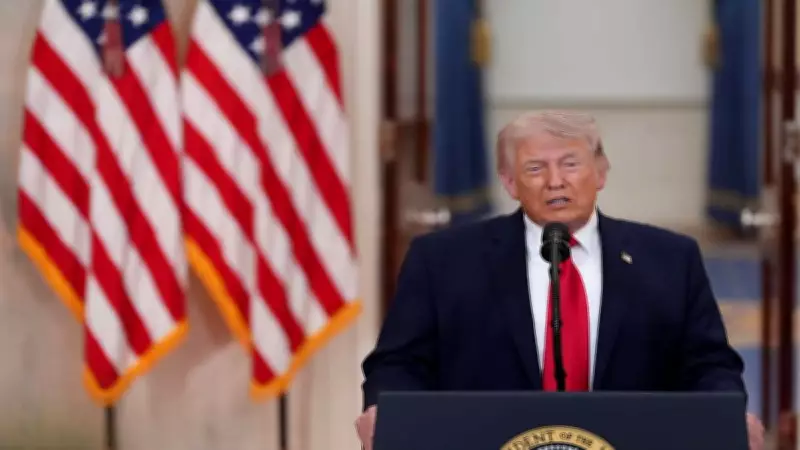
Trump Issues Dire Warning to Iran Amid West Asia Conflict
Former United States President Donald Trump has delivered a stark and ominous warning to Iran, cautioning that the nation's entire civilization faces imminent and irreversible destruction. In a statement that has sent shockwaves through international diplomatic circles, Trump declared, "Whole civilisation will die tonight, never to be brought back again," underscoring the severe geopolitical tensions currently roiling the West Asia region.
Escalating Tensions in a Volatile Region
The warning comes against the backdrop of an ongoing and multifaceted conflict in West Asia, where regional powers, including Iran, are embroiled in a complex web of hostilities and proxy wars. Trump's remarks are interpreted by analysts as a direct response to Iran's recent military posturing and its support for various militant groups across the region. This situation has created a highly volatile environment, with the potential for a broader regional conflagration that could draw in global powers.
The former president's statement is seen as a significant escalation in rhetoric, moving beyond traditional diplomatic warnings to a more apocalyptic tone. It reflects deep-seated concerns within certain factions of the U.S. political establishment regarding Iran's nuclear ambitions and its destabilizing activities in neighboring countries. The use of such definitive and catastrophic language is unprecedented in recent U.S.-Iran relations, raising alarms about the possibility of a preemptive military strike.

Historical Context and Political Implications
Donald Trump's relationship with Iran has been historically contentious. During his presidency, he withdrew the United States from the landmark Iran nuclear deal, formally known as the Joint Comprehensive Plan of Action (JCPOA), and imposed crippling economic sanctions on the Islamic Republic. His administration also authorized the targeted assassination of top Iranian military commander Qasem Soleimani in 2020, an action that brought the two nations to the brink of all-out war.
This latest warning appears to be a continuation of his "maximum pressure" campaign, albeit from outside the Oval Office. Political observers note that such statements could influence current U.S. foreign policy, as the Biden administration grapples with how to address the Iranian threat while attempting to revive diplomatic negotiations. The timing of Trump's comments is particularly sensitive, given the fragile ceasefire efforts and humanitarian crises unfolding in parts of West Asia.
International Reactions and Security Concerns
The international community has reacted with a mixture of concern and condemnation. Allies in Europe and the Middle East are urging restraint, emphasizing the need for dialogue over threats of annihilation. Security experts warn that rhetoric of this nature could inadvertently trigger a miscalculation or provocation, leading to an unintended military confrontation with catastrophic consequences for global stability.
Key points of concern include:
- The potential for Iran to accelerate its nuclear program in response to perceived existential threats.
- The risk of retaliatory attacks on U.S. interests or allied forces in the region.
- The broader impact on oil markets and global economic security, given the strategic importance of the Strait of Hormuz.
As the situation continues to evolve, the world watches anxiously, hoping that cooler heads will prevail to prevent the realization of Trump's grim prophecy. The warning serves as a sobering reminder of the high stakes involved in the geopolitics of West Asia, where words can have the power to shape destinies and alter the course of history.






