Trump's Unyielding Position on Iran Amid Global Energy Crisis
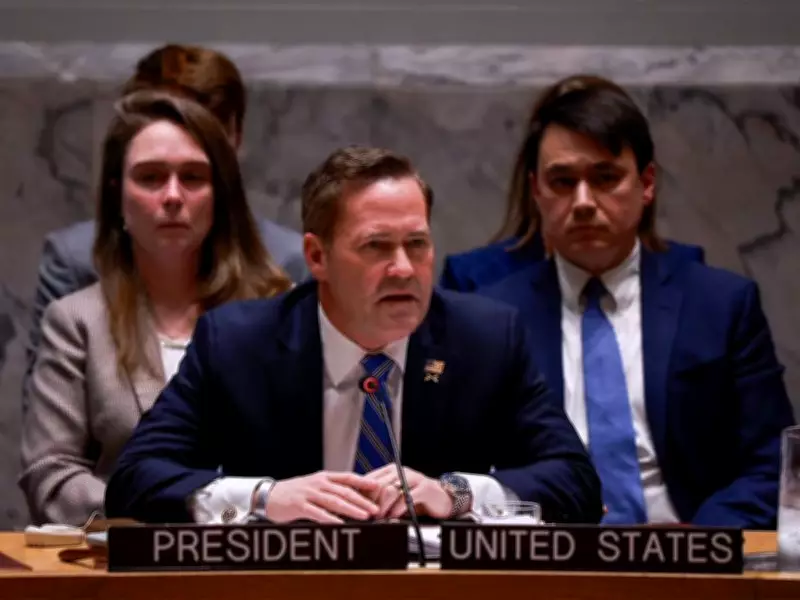
In a recent interview with Fox News, US Ambassador to the United Nations Mike Waltz emphasized that President Donald Trump remains steadfast in his "red lines" regarding Iran. Waltz declared that the Trump administration will not permit the Islamic Regime to threaten global energy supplies or destabilize economies, particularly in light of the virtual blockade of the Strait of Hormuz during the ongoing West Asia conflict.
IRGC's Economic Control and War Funding
Ambassador Waltz highlighted the significant role of the Islamic Revolutionary Guard Corps (IRGC) in controlling much of Iran's economy and critical infrastructure. He noted that the regime utilizes these assets to sustain its remaining war efforts, underscoring the urgency of the situation. "The IRGC controls much of Iran's economy and its critical infrastructure and continues to fund what remains of its war efforts through these key assets," Waltz stated during the interview.
He further explained that President Trump is taking a firm stance, unlike previous administrations, by standing by his red lines. "The President is not messing around. He stands, unlike his predecessors, by his red lines, and he's not going to allow this genocidal regime to hold the world's energy supplies or economies hostage," Waltz asserted.

Strategic Importance of the Strait of Hormuz
The Strait of Hormuz is a critical global transit route, handling approximately 15 million barrels per day of crude oil and 5 million barrels per day of oil products. This represents roughly 25 percent of global seaborne oil trade, making it a vital artery for international energy markets. Waltz emphasized that Trump will not allow Iran to leverage its control over this strategic waterway to manipulate global energy supplies.
In a related development, President Trump issued a stern warning on Truth Social, threatening severe consequences if Iran fails to reopen the Strait of Hormuz. He stated, "If Iran doesn't FULLY OPEN, WITHOUT THREAT, the Strait of Hormuz, within 48 HOURS from this exact point in time, the United States of America will hit and obliterate their various POWER PLANTS, STARTING WITH THE BIGGEST ONE FIRST!"
Nuclear Weapons Prohibition and UNSC Resolutions
Ambassador Waltz also reiterated the United States' long-standing position that Iran must not be allowed to develop nuclear weapons. He cited decades of United Nations Security Council (UNSC) resolutions aimed at preventing Iran from acquiring nuclear capabilities. "As the UN Ambassador, I've cited to the Security Council the two decades of Security Council Resolutions that countries have voted for around the world to ensure Iran doesn't have a nuke—but the President isn't just going to send strongly-worded letters," he added, indicating a more proactive approach under Trump's leadership.
Background of the Escalating Conflict
The current tensions stem from an escalating conflict that began on February 28, following the killing of Iran's 86-year-old Supreme Leader, Ayatollah Ali Khamenei, in joint military strikes by the US and Israel. In retaliation, Iran targeted Israel and US assets in several Gulf countries, leading to disruptions in waterways and affecting international energy markets and global economic stability. As a result, Iran has virtually closed the Strait of Hormuz, exacerbating the crisis.
This situation underscores the high stakes involved, with global energy security hanging in the balance as the Trump administration takes a hardline stance against Iranian aggression.