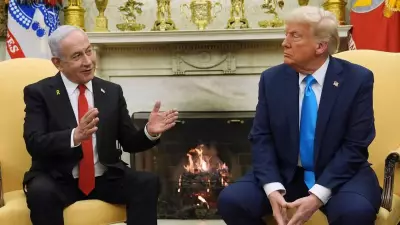
As the world anticipates a potential second term for former US President Donald Trump, his geopolitical blueprint appears to extend far beyond domestic borders. A close examination of his statements and advisor insights reveals a focused, ambitious, and controversial strategy aimed at reshaping American influence across the Western Hemisphere and even into the Arctic.
The Latin American Chessboard: Energy, Migration, and Countering Adversaries
Central to Trump's envisioned foreign policy is a hard-nosed approach towards several Latin American nations. The primary target is Venezuela, home to the world's largest proven oil reserves. The Trump camp views the current socialist government under Nicolás Maduro as a hostile regime. The plan is not merely about sanctions but could involve more direct intervention, potentially using US military force to topple the government and install a friendly administration. The objective is twofold: secure a massive, proximate energy source for the United States and deal a significant blow to the anti-American axis in the region.
Similarly, Cuba remains in the crosshairs. Trump is expected to reverse any openings made during the Obama-Biden era, reinstating harsh sanctions and tightening the embargo. The goal is to exert maximum pressure on the communist government, crippling its economy and limiting its ability to support allies like Venezuela and Nicaragua. This forms part of a broader strategy to roll back what his advisors perceive as Chinese and Russian expansion in America's traditional backyard.

Addressing the Southern Border and Regional Partnerships
The strategy for Mexico and Colombia is driven by immediate domestic concerns, particularly illegal immigration and drug trafficking. For Mexico, Trump has floated the idea of deploying the US military to conduct large-scale operations against drug cartels, a move that would severely test Mexican sovereignty. The threat of imposing devastating tariffs also remains a key tool to coerce cooperation on stemming migrant flows.
Regarding Colombia, the focus shifts to a key regional ally. The Trump team is concerned about the South American nation's recent diplomatic shifts, including its re-established ties with Venezuela. The expectation is that a Trump administration would demand Colombia fall firmly in line with US policy, potentially using aid and trade as leverage to ensure it acts as a reliable partner in isolating Caracas and managing regional security.
The Arctic Frontier: Greenland and the New Cold War
Perhaps the most unexpected element of this strategy is the renewed interest in Greenland. Trump's infamous 2019 offer to purchase the autonomous Danish territory was not a mere whim. It is rooted in long-term strategic competition with China and Russia. The Arctic region, rich in minerals and gaining geopolitical importance due to climate change, is a new theater of great-power rivalry.
China has been actively seeking economic footholds in Greenland, investing in critical mineral mines. For Trump, controlling or having decisive influence over Greenland would secure vital resources, expand US military presence in the Arctic, and block Chinese advances near North America. This move is a clear indicator of how his foreign policy views economic and territorial control as essential tools in a zero-sum game against strategic competitors.
Implications and a World Bracing for Impact
The cumulative effect of these plans points to a potential second Trump term defined by aggressive, transactional, and unilateral foreign policy. The doctrine prioritizes direct American economic and security interests above multilateral agreements or diplomatic niceties. It signals a willingness to use hard power, as seen in the Venezuela plan, and economic coercion, as with Mexico and Colombia, to achieve desired outcomes.

For the international community, including India, this signals a period of heightened volatility. An interventionist US in Latin America could disrupt global oil markets and trigger new refugee crises. A confrontational approach in the Arctic could accelerate militarization. Allies may be forced to choose sides, while adversaries like China and Russia will likely respond with their own maneuvers. The world is closely watching, as the implementation of even a fraction of this agenda would redraw geopolitical maps and challenge the existing world order.