

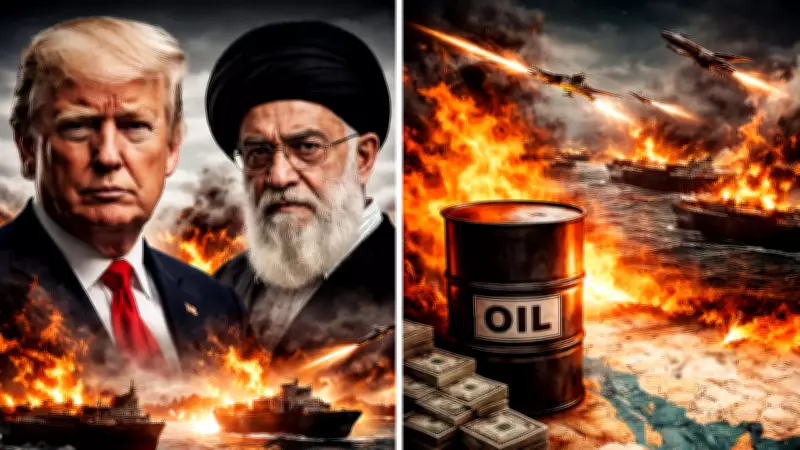
Trump's Iran Strategy Pivots from Regime Change to Strait of Hormuz Negotiations
What began as Donald Trump's ambitious vision to topple Iran's clerical regime under Supreme Leader Ali Khamenei has dramatically transformed into a pressing diplomatic push for a "deal" focused on reopening the strategically vital Strait of Hormuz. The narrow maritime passage, through which approximately 20% of global oil supplies flow daily, has become the central battleground in a conflict that has reshaped Middle Eastern geopolitics.
Operation Epic Fury and the Elimination of Khamenei
On February 28, Trump orchestrated Operation Epic Fury in close coordination with Israeli Prime Minister Benjamin Netanyahu. Israel simultaneously launched Operation Roaring Lion, marking the first joint American-Israeli strikes against Iran. The campaign achieved its primary objective with the elimination of Ayatollah Ali Khamenei, Iran's supreme leader who had ruled for over three decades.
The initial assault was described by Pentagon officials as deploying twice the firepower of the 2003 "shock and awe" campaign that initiated the Iraq invasion. According to intelligence reports, Israel had been tracking Khamenei's movements for years using sophisticated surveillance methods, including monitoring traffic light patterns to follow his convoy routes.

Iran's Forceful Retaliation and Regional Escalation
A leaderless Iran responded with overwhelming force, targeting American military bases across the Gulf region while launching missile and drone attacks against Israeli cities. The conflict rapidly expanded as Tehran escalated its campaign, striking facilities in Qatar, Saudi Arabia, Iraq, Bahrain, the United Arab Emirates, Oman, and Yemen.
Lebanon-based Hezbollah, mourning the loss of the Shia leader Khamenei, joined the conflict by attacking Israeli positions. Gulf nations issued joint statements condemning Iranian aggression while raising alarms about potential attacks from Iran-backed proxy militias operating throughout the region.
The Strait of Hormuz: Economic Chokepoint and Strategic Pressure Point
The narrow, shallow Strait of Hormuz has emerged as the conflict's most critical flashpoint. Forcing ships within striking distance of Iran's Musandam Peninsula coastline, the waterway represents a natural advantage for asymmetric warfare. Despite Trump's proposal for joint control with Iranian leadership, military force remains the primary consideration for securing the passage.
Iran has effectively choked off the strait following the American-Israeli strikes, creating global energy security concerns. Trump issued a 48-hour ultimatum demanding Iran reopen the waterway "without threat," warning of strikes against Iranian power plants if compliance wasn't achieved.
Allied Reluctance and Diplomatic Isolation
Fifteen days into the conflict, Trump invited multiple nations including China, France, Japan, South Korea, and the United Kingdom to deploy warships to reclaim control of the Strait of Hormuz. The request met with universal refusal, with Germany stating plainly, "This is not our war. We have not started it."
European Union foreign policy chief Kaja Kallas explained the reluctance, noting that "nobody is ready to put their people in harm's way in the Strait of Hormuz." Analysts point to strained alliances, lack of prior consultation, and the significant risks of becoming direct targets for Iranian retaliation as key factors keeping US allies on the sidelines.
Economic Warfare and Asymmetric Cost Dynamics
The financial dimensions of the conflict reveal a striking imbalance favoring Iran's strategy. While the United States spends an estimated $1 billion daily on military operations, with total costs exceeding $18 billion in the initial weeks, Iran employs low-cost drones priced around $20,000 against American interceptor missiles costing $1.3 to $4 million each.
Meanwhile, Iran continues to benefit economically from its control over the Strait of Hormuz, maintaining oil exports near prewar levels of approximately 1.6 million barrels daily while global prices surge. Tehran has specifically targeted oil infrastructure across the Gulf, striking Saudi Aramco facilities, the Port of Fujairah oil hub in the UAE, Qatar's Ras Laffan liquefied natural gas plant, and an Israeli oil refinery.

Diplomatic Efforts and Ceasefire Proposals
Trump has recently adopted a more measured approach, announcing a five-day pause in strikes against Iranian energy infrastructure while describing ongoing talks as "productive." Through intermediaries including Pakistan, Washington has presented Tehran with a 15-point ceasefire framework demanding restrictions on Iran's nuclear program, missile capabilities, and regional activities in exchange for sanctions relief.
Iran has publicly denied any negotiations, dismissing American claims as the US "negotiating with itself." Tehran's demands include recognition of its sovereign rights, war reparations, binding security guarantees, the lifting of all sanctions, closure of US military bases in the region, and formal control over Strait of Hormuz traffic.
Regional Impact and Security Concerns
The conflict has shattered perceptions of regional stability, with even Dubai—long considered a "safe haven" and symbol of prosperity—coming under repeated attack. The sail-shaped Burj Al Arab hotel and Dubai International Airport have sustained damage, while explosions have rattled residential towers throughout the city.
Gulf states remain on high alert against potential attacks from Iran-backed militias, with Kuwait announcing it foiled a plot to assassinate state leaders linked to Hezbollah. The persistent threat of missile activity has disrupted civil aviation across the Middle East, forcing airspace closures and flight rerouting as authorities work to protect commercial aircraft from conflict zones.
As the war continues with no clear resolution in sight, the strategic focus has shifted from regime change ambitions to the urgent economic imperative of reopening the Strait of Hormuz—a transition that underscores both the limitations of military power and the complex realities of modern geopolitical conflict.





