Trump's Federal Reserve Conundrum: Four Candidates, No Ideal Match
President Donald Trump finds himself in a complex predicament as he approaches the critical decision of selecting the next Federal Reserve chair. Despite months of claiming to have made up his mind, the president continues to deliberate among four finalists, none of whom perfectly align with his specific requirements. The central challenge remains Trump's desire for a chair who will aggressively pursue lower interest rates while simultaneously maintaining sufficient credibility on Wall Street and within the Federal Reserve system to implement these policies effectively.
The Final Four: A Spectrum of Trade-offs
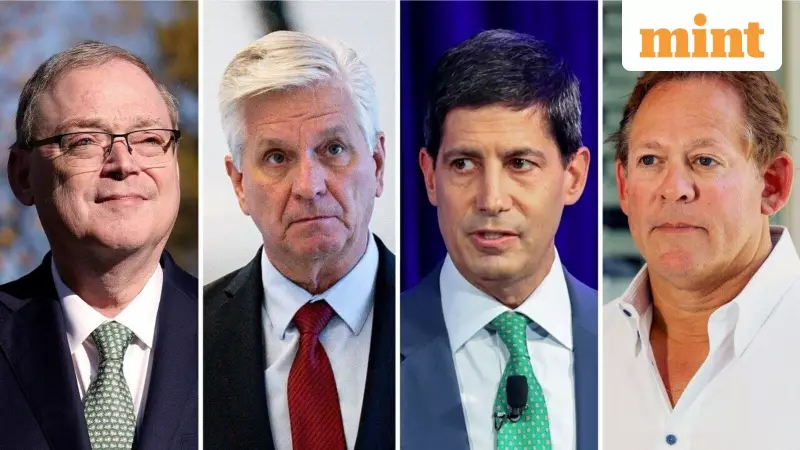
Treasury Secretary Scott Bessent, who has been managing the search process after removing himself from consideration, has presented President Trump with four distinct candidates. Each represents a different balance between the president's dual priorities of loyalty and institutional credibility.
- Kevin Warsh: A former Federal Reserve governor who has publicly praised Trump on television and possesses the traditional credentials expected of a Fed chair. However, his connections to inflation-skeptical billionaire investor Stan Druckenmiller and his establishment Republican background create potential conflicts with Trump's current political base.
- Christopher Waller: A current Fed governor appointed by Trump in 2020 who enjoys popularity on Wall Street for his intellectually consistent arguments favoring lower interest rates. Despite his policy alignment, Waller lacks a personal relationship with Trump, and their brief interview last month reportedly failed to impress the president.
- Rick Rieder: BlackRock's chief investment officer of global fixed income, overseeing more than $3 trillion in assets. As a consistent advocate for lower interest rates with no prior government experience, Rieder would be the first Fed chair without Washington ties since 1978. His political donations to Trump's opponents and BlackRock's ESG focus create potential complications.
- Kevin Hassett: Director of the White House National Economic Council and the candidate most aligned with Trump's economic agenda. While Trump knows him best, appointing his own adviser risks raising questions about Federal Reserve independence that could unsettle financial markets.
The Presidential Bind: Loyalty Versus Independence
President Trump's frustration with the selection process became evident during his recent address at the World Economic Forum in Davos, Switzerland. While praising all four finalists as "respected" and capable of doing "a fantastic job," he expressed significant concern about candidates who "say everything I want to hear" during interviews only to assert their independence once confirmed. "It's amazing how people change once they have the job," Trump remarked, characterizing this potential shift as "sort of disloyalty."

This tension was further highlighted in Trump's December 23 Truth Social post, where he established "The Trump Rule"—a demand that the Federal Reserve abandon its current inflation approach that treats positive economic news as negative for interest rate cuts. The president concluded with an unambiguous warning: "Anybody that disagrees with me will never be the Fed Chairman!"
Historical Context and Current Dynamics
The search for a replacement for current Fed Chair Jerome Powell, whose term expires in May, represents a significant moment in U.S. monetary policy history. Trump originally selected Powell eight years ago believing he would support lower interest rates, but has since expressed frustration with Powell's independence and decision-making. This history informs Trump's current cautious approach to selecting a successor who will remain loyal to his economic vision.
Despite repeated suggestions from Trump and Bessent that an announcement was imminent, the timeline has shifted multiple times, leading some observers to question whether the president is searching for an impossible combination of qualities. White House press secretary Karoline Leavitt emphasized that "President Trump will make this announcement at the appropriate time," adding that "anyone pretending to know who President Trump's Fed Chair pick will be is kidding themselves."

Market Implications and Political Considerations
The Federal Reserve's upcoming decision on interest rates, expected to maintain current levels, will likely draw fresh criticism from President Trump, who has declared inflation defeated and called for aggressive rate cuts. Each finalist presents different implications for financial markets:
- Hassett's selection could raise concerns about Fed independence despite his policy alignment with Trump.
- Warsh's establishment background might reassure traditional markets but could alienate Trump's political base.
- Waller's Fed insider status offers continuity but lacks the personal connection Trump values.
- Rieder's market-based consistency addresses Trump's concerns about post-confirmation changes but comes with political baggage.
With Powell's term not expiring until mid-May, there remains ample time for Senate confirmation even if Trump delays his decision until late February. This extended timeline falls within historical norms for announcing a new Federal Reserve chair to replace an incumbent, providing the president additional opportunity to evaluate his options and potentially seek alternatives beyond the current finalists.
The ultimate decision will reveal much about Trump's priorities in his second term—whether he values loyalty above all else or recognizes the importance of maintaining the Federal Reserve's credibility in global financial markets. As the deliberation continues, financial markets and political observers alike await what could be one of the most consequential economic appointments of Trump's presidency.