Trump's Davos Address Reveals Deepening Transatlantic Divide
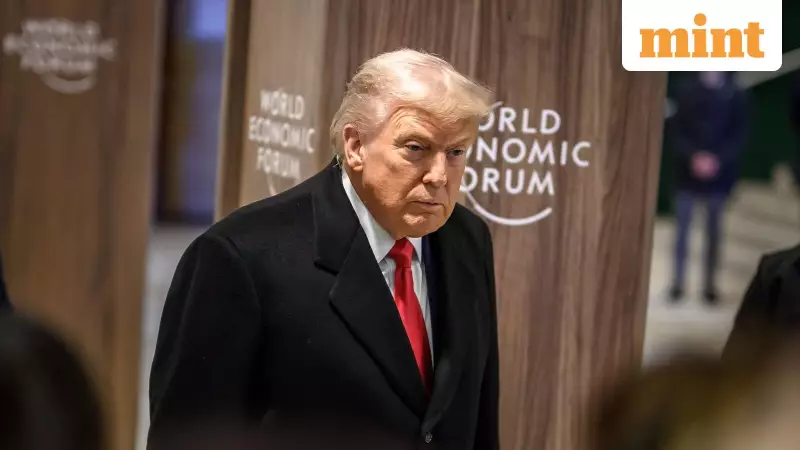
US President Donald Trump delivered a controversial speech at the World Economic Forum in Davos on Wednesday, January 21, 2026, that exposed significant fractures in America's relationship with its European allies. While backtracking on earlier threats to use force to acquire Greenland, the President nonetheless embarrassed European leaders with pointed criticisms of their defense capabilities and economic policies.
Greenland Controversy Takes Center Stage
The dramatic day began with President Trump announcing he would not invade Greenland after all, despite having threatened tariffs against several countries just days earlier if they obstructed his efforts to purchase the Arctic territory from Denmark. This reversal came following Tuesday's market turmoil and sent US stock indexes soaring on Wednesday.
Hours later, Trump revealed he would not impose the threatened tariffs either, claiming to have reached a "framework of a future deal" on Greenland with the North Atlantic Treaty Organization. While details remain forthcoming, the episode highlighted European vulnerability, with Trump noting that Denmark and other allies would struggle to defend Greenland from the United States or any other potential aggressor.

Scathing Critique of European Policies
President Trump's address included a lengthy critique of Europe's economic dysfunctions, particularly regarding energy policy. He derided the European Union's flagship Green New Deal climate policies as the "green new scam," criticized Britain for insufficient North Sea oil extraction, and mocked what he called the "catastrophic energy collapse" that has affected European nations in recent years.
The President reminded European leaders that they required sustained American pressure before increasing defense spending to provide for their own security. He also noted Europe's dependence on US leadership in supporting Ukraine against Russian aggression that European nations were unable to deter or resolve independently.
The Davos Disconnect Exposed
The biennial gathering of political and business leaders at Davos typically espouses a liberal international order based on democracy and free markets. However, Trump's speech highlighted what critics call the "Davos disconnect"—the reality that these same leaders rely heavily on American military and economic power while pursuing policies that often undermine their own security capabilities.
European nations have consistently depended on US protection while funding expansive welfare states and climate initiatives at the expense of their military budgets. Trump's pointed remarks struck a nerve precisely because they exposed this uncomfortable truth to an audience that prefers to maintain the facade of European strategic autonomy.
Global Implications and Reactions
The deepening rift between the United States and its allies has dangerous implications, with adversaries like China and Russia closely observing how easily Trump can be provoked into antagonizing staunch NATO partners. The Greenland controversy has particularly concerned security experts who worry it could create a permanent Atlantic divide that might ultimately undermine the NATO alliance.
NATO Secretary General Mark Rutte warned that the Greenland distraction comes at a particularly inopportune time, diverting attention from the more urgent crisis in Ukraine. Meanwhile, some European leaders appear to be considering alternative alignments, with Canadian Prime Minister Mark Carney recently calling for middle powers to form new alliances to counter great-power rivalry—even as he traveled to Beijing to seek favor with the Chinese Communist regime.
Looking Forward
The West urgently needs statesmanship to resolve the Greenland dispute in a manner that strengthens both US security and the NATO alliance. While President Trump's announced "framework" offers hope for closing the Davos divide, the underlying tensions exposed during his speech suggest that transatlantic relations face significant challenges ahead. The episode serves as a stark reminder of how quickly longstanding alliances can become strained when fundamental assumptions about mutual dependence and shared values are called into question.