Trump's Alien Disclosure Pledge Rekindles Area 51 Fascination
Recent statements by former US President Donald Trump regarding the potential release of government documents concerning aliens and unidentified flying objects have once again propelled the enigmatic Area 51 into global attention. Trump announced his intention to instruct the Pentagon and various federal agencies to commence the disclosure of such information. His remarks were accompanied by criticism directed at former President Barack Obama, whom Trump accused of inappropriately discussing classified matters related to extraterrestrial phenomena. Obama had previously stated in a podcast interview that while unidentified aerial phenomena are indeed real, there exists no concealed alien facility as often speculated.
The Secretive Heart of Nevada: Area 51 Unveiled
Area 51 stands as one of the most clandestine military installations in the United States, with decades of association to classified aircraft testing, stringent security protocols, and persistent claims about UFOs and alien technology. Although the US government has formally acknowledged the base's existence, the majority of its operations remain shrouded in secrecy. Situated in the Nevada desert, approximately 85 to 120 miles northwest of Las Vegas, Area 51 is located near the dry lake bed known as Groom Lake, with the nearest small towns being Rachel and Hiko.
This facility is an integral component of the expansive Nevada Test and Training Range, which spans over 2.9 million acres of land, as reported by the BBC. The restricted airspace and surrounding terrain are utilized extensively for military training and advanced testing purposes. The designation "Area 51" originates from its labeling on Atomic Energy Commission maps, though officials seldom employ this term, preferring references such as Groom Lake or Homey Airport, according to Space.com. The broader area is typically described by the government as part of the Nevada Test and Training Range, linked to Edwards Air Force Base.

While satellite imagery of the base is accessible on platforms like Google Maps, physical entry remains rigorously prohibited, underscoring its highly guarded nature.
Historical Origins and Development of Area 51
Established in 1955 amidst the Cold War tensions between the United States and the Soviet Union, Area 51 was conceived as a testing and development hub for secretive aircraft initiatives. The inaugural major project associated with the base was the Lockheed U-2 spy plane program, designed for high-altitude reconnaissance missions. The sensitive character of this endeavor necessitated a remote and secure locale for testing, leading to the selection of this desert site.
Over subsequent years, the base hosted trials for other classified aircraft, including the SR-71 Blackbird, the A-12 Archangel, and the F-117 Nighthawk stealth fighter, cementing its reputation as a center for cutting-edge aviation research. In an effort to entice workers to this isolated desert environment, the facility was once marketed as "Paradise Ranch," a name intended to enhance its appeal.
Despite commencing operations in 1955, Area 51's existence was not officially recognized for many decades. In August 2013, the CIA declassified documents pertaining to the U-2 program and publicly acknowledged the base. Four months later, President Barack Obama became the first US president to reference Area 51 in a public forum.
Inside Area 51: Infrastructure and Workforce
Public knowledge regarding the precise activities conducted within Area 51 is limited, but it is widely believed that the site continues to serve as a testing ground for advanced and classified aircraft. The base features extensive runways, some extending up to 12,000 feet in length, and is enveloped by restricted airspace covering tens of thousands of acres. Specifically, the airspace designated as Area 51 is reported to encompass around 38,400 acres, while the restricted zone around Groom Lake spans approximately 23 by 25 miles.

The base itself occupies an area of about 6 by 10 miles, predominantly comprised of runways and associated infrastructure. An estimated 1,500 individuals are believed to be employed at the facility, with many commuting from Las Vegas via special charter flights arranged for personnel. The wider Nevada Test and Training Range is characterized by the US military as a versatile and realistic battle-space employed for testing tactics, developing systems, and conducting advanced training exercises.
The Veil of Secrecy: Why Area 51 Remains Off-Limits
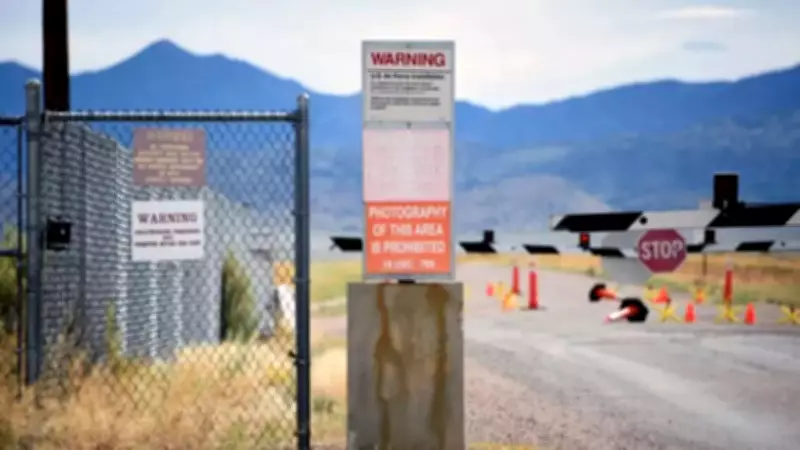
Area 51 is classified as a Military Operating Area, with access strictly reserved for authorized personnel. The perimeter is demarcated with warning signs and monitored through surveillance systems, including motion sensors, cameras, and patrols. Activities such as photography, surveillance, and unauthorized entry are expressly forbidden.
Civilian aircraft are prohibited from flying over the base, and violations of the no-fly zone can lead to severe repercussions. Security forces conduct regular patrols and possess the authority to detain trespassers, with signs indicating that deadly force is authorized. Although traditional fencing does not encircle the base, its boundaries are clearly indicated by signs and orange poles.
The secrecy enveloping Area 51 is primarily attributed to national security considerations. The testing of advanced aircraft, drone systems, radar evasion technology, and other classified aviation projects demands rigorous operational confidentiality. While other secret facilities exist in the United States, such as Wright-Patterson Air Force Base in Ohio and the Tonopah Test Range in Nevada, none have garnered the same level of public intrigue as Area 51.
UFOs and Alien Speculation: Separating Fact from Fiction
The association between Area 51 and UFOs is largely rooted in public conjecture. The term UFO denotes an "unidentified flying object" and does not inherently imply extraterrestrial spacecraft. However, due to the base's involvement in testing novel and secret aircraft, unusual sightings have frequently been reported in the vicinity.
During the 1950s, when the U-2 spy plane commenced operations at altitudes surpassing those of commercial aircraft, observers often failed to identify it, leading to accounts of mysterious objects in the sky. This secrecy surrounding new aircraft reportedly contributed to UFO sightings in Nevada, with intelligence agencies managing such reports during that era.
One of the most prominent claims linking Area 51 to aliens revolves around the 1947 Roswell incident in New Mexico, where some allege that a crashed alien spacecraft and its pilots were transported to the base. The US government has consistently refuted these assertions, maintaining that the crashed object was a weather balloon. In 1989, Robert Lazar asserted that he worked on extraterrestrial technology at Area 51 and witnessed alien autopsy photographs, though his claims were later discredited after scrutiny. Despite this, they have perpetuated public belief in alien theories.
The amalgamation of stringent secrecy and scant official information has fueled numerous conspiracy theories over time, yet no official evidence corroborates alien activity at the site.
The "Storm Area 51" Phenomenon and Cultural Impact
In 2019, a Facebook event titled "Storm Area 51, they can’t stop all of us" achieved viral status. Created as a jest by 20-year-old Matty Roberts, the concept proposed that a mass influx of individuals could uncover the base's secrets. Over three million people expressed interest online, prompting local towns like Rachel to prepare for substantial crowds.
In reality, approximately 6,000 people congregated near the area, participating in minor events such as music gatherings and themed activities. The base itself remained unbreached, with only a few detentions reported. The US Air Force had issued warnings against attempting to enter the restricted zone and affirmed its readiness to safeguard its assets. Although the event attracted global media coverage, it did not precipitate any significant security incidents.
Area 51 has permeated popular culture through numerous films and television series, reinforcing its image as a secret alien facility. The 1996 blockbuster Independence Day, directed by Roland Emmerich and starring Will Smith, depicted the base as a repository for alien spacecraft, significantly bolstering the Area 51 mythos. Additionally, the base has been featured or referenced in productions such as The X-Files, Doctor Who, Agents of Shield, and films like Paul (2011) and Area 51 (2015).
Beyond entertainment, Area 51 has inspired documentaries, mockumentaries, and extensive online discourse. The 1995 television special Alien Autopsy: Fact or Fiction? purported to show footage of an alien examination but was subsequently debunked. Tourism in adjacent towns reflects this cultural fascination, with Rachel, Nevada, offering alien-themed attractions such as The Little A’Le’Inn roadside diner and gift shops, capitalizing on the enduring allure of Area 51.