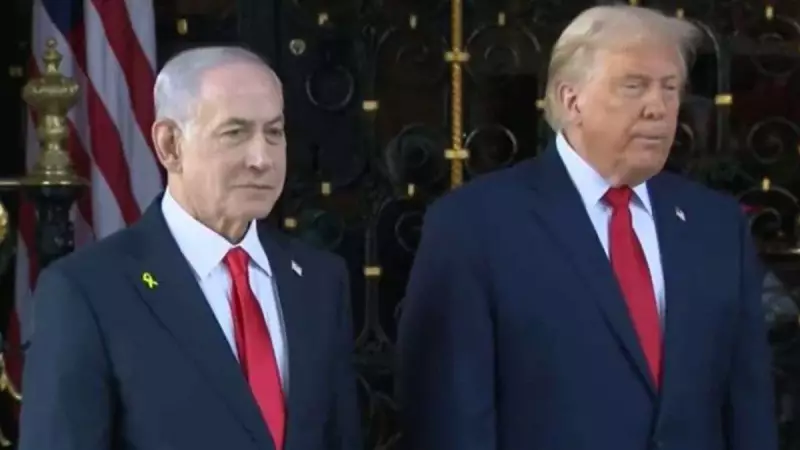
In a significant escalation of geopolitical rhetoric, former United States President Donald Trump has issued a stern and unambiguous warning to the Islamic Republic of Iran. The warning comes amid reports and concerns that Tehran is actively working to revive its controversial ballistic missile and nuclear development programmes.
The Core of Trump's Warning
Delivering his message on Monday, December 30, 2024, Trump explicitly stated that Iran would face severe and dire consequences if it continues down the path of advancing these military capabilities. The former President's statement was a clear attempt to reassert a position of maximum pressure, reminiscent of his administration's policy towards Tehran during his term in the White House from 2017 to 2021.
Trump's warning is not an isolated comment but a calculated response to intelligence assessments and international reports suggesting that Iran has been ramping up activities related to its uranium enrichment and missile development projects. These activities are widely viewed as potential steps towards acquiring a nuclear weapons capability, a red line for the United States and its allies, particularly Israel and Saudi Arabia.

Context: A History of Confrontation and the JCPOA
The backdrop to this latest flare-up is the deeply fractured 2015 nuclear deal, formally known as the Joint Comprehensive Plan of Action (JCPOA). The agreement, negotiated by the Obama administration along with other world powers, placed strict limits on Iran's nuclear activities in exchange for sanctions relief. In a defining move of his presidency, Donald Trump unilaterally withdrew the US from the JCPOA in 2018, reinstating and even intensifying crippling economic sanctions on Iran under his "maximum pressure" campaign.
Following the US withdrawal, Iran gradually began to step away from its own commitments under the deal, increasing uranium enrichment levels and stockpiles beyond agreed limits. The election of President Joe Biden in 2020 brought hopes of a diplomatic revival and a potential return to the agreement. However, indirect negotiations have repeatedly stalled, leaving the deal in a state of effective collapse. Trump's latest warning signals a forceful re-entry into this volatile debate, positioning himself against any potential softening of the US stance.
Potential Implications and Global Reactions
The implications of Trump's warning are multifaceted and carry significant weight for global security dynamics. Firstly, it injects a new layer of complexity into an already tense regional environment in the Middle East. Iran's missile and nuclear ambitions are a primary security concern for Israel, which has historically not ruled out military action to prevent Tehran from obtaining a nuclear weapon. Trump's strong language could be seen as a green light or encouragement for more aggressive posturing from Iran's regional rivals.
Secondly, this statement has immediate domestic political ramifications in the United States. As a leading figure in the Republican Party and a candidate in the upcoming presidential election, Trump is using foreign policy to draw a sharp contrast with the current Biden administration. His message is aimed at voters who view his approach towards Iran as tougher and more decisive. It also puts pressure on the Biden administration to clarify its own strategy for dealing with Iran's advancing programmes, which have continued despite diplomatic efforts.
International reactions are likely to be mixed. European signatories to the JCPOA—France, Germany, and the United Kingdom—who have struggled to salvage the deal, may view Trump's re-emergence on this issue as destabilizing. Meanwhile, Gulf Arab states that share concerns about Iran's power may privately welcome the strong tone, even as they publicly call for calm.
The ultimate consequence Trump alludes to remains deliberately vague but ominous. It could encompass a range of actions, from imposing even stricter economic sanctions to, in the most extreme scenario, not ruling out military options. This ambiguity is a tool of deterrence, intended to make Iranian leadership reconsider the costs of their current trajectory.

In conclusion, Donald Trump's direct warning to Iran over its missile and nuclear programmes marks a serious escalation in rhetoric that threatens to further inflame one of the world's most dangerous flashpoints. It reflects the enduring failure of diplomatic efforts to find a lasting solution and underscores the persistent threat of proliferation in the Middle East. As the world watches, the actions taken by Iran in response, and the counter-actions from the US and its allies, will determine whether this war of words translates into a more dangerous confrontation on the ground.