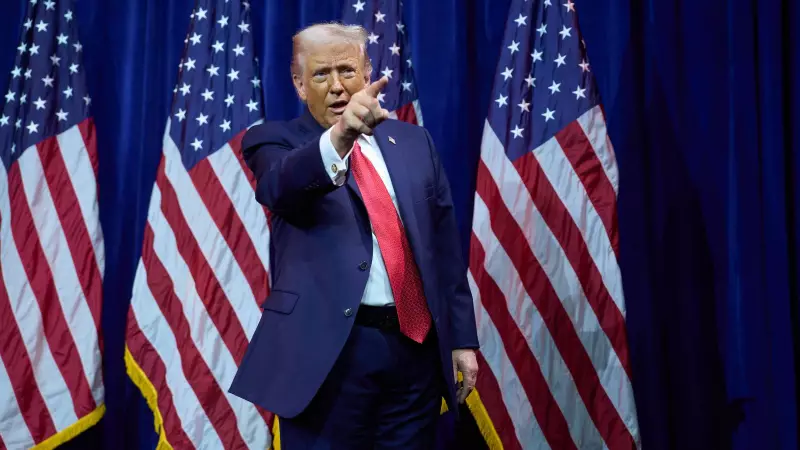
Former United States President Donald Trump has issued a stark warning to Cuba, threatening to sever its access to oil revenues if he wins the upcoming presidential election. This aggressive stance comes in direct response to a recent violent incident at the Venezuelan embassy in Washington, D.C., which the Trump campaign has squarely blamed on the Cuban government.
The Embassy Incident and Trump's Accusation
The controversy erupted after a group of protesters, who were opposing the government of Venezuelan President Nicolás Maduro, forcefully entered the Venezuelan embassy building in the American capital. The event, which occurred on May 16, 2024, involved clashes and significant property damage. In a strongly worded statement, Trump's campaign alleged that this act of "political violence" was orchestrated and financed by the communist regime in Havana.
Trump explicitly connected the embassy attack to his broader foreign policy agenda, framing it as a direct challenge that demands a severe response. He accused the Cuban government of using its intelligence apparatus to destabilize situations abroad, a long-standing accusation from Washington.

A Promise of Severe Economic Retaliation
The core of Trump's threat lies in economic punishment. He declared that upon returning to the White House, his administration would move decisively to block all oil money destined for Cuba. This would involve reinstating and potentially strengthening the stringent sanctions that were eased during the Biden presidency.
"When I am back in the White House, I will shut down the flow of oil money to the Communist regime in Cuba," Trump stated. He emphasized that the current Democratic administration's policies have, in his view, provided a financial lifeline to both the Cuban and Venezuelan governments, which he labels as dictatorships.
Broader Implications for US-Latin America Policy
This statement signals a potential dramatic shift in US policy towards Latin America if Trump secures a second term. It marks a clear intent to revert to the "maximum pressure" campaign that characterized his first administration, targeting not just Cuba but also its ally, the Venezuelan government of Nicolás Maduro.
The threat underscores the deep geopolitical tensions in the region, where the United States has historically opposed the socialist governments in Havana and Caracas. Trump's promise aims to appeal to voters in key states like Florida, where many Cuban-American and Venezuelan-American exiles strongly support a hardline approach against these regimes.
Analysts suggest that such a policy would have immediate repercussions, potentially crippling Cuba's already fragile energy sector and economy, which relies heavily on imported fuel. The move is also seen as an attempt to draw a sharp contrast with President Joe Biden's more diplomatic, albeit still complex, engagement with Cuba.
As the 2024 election campaign heats up, foreign policy towards America's southern neighbors is poised to become a significant point of debate, with Trump's latest warning serving as a potent preview of the confrontational path he promises to pursue.