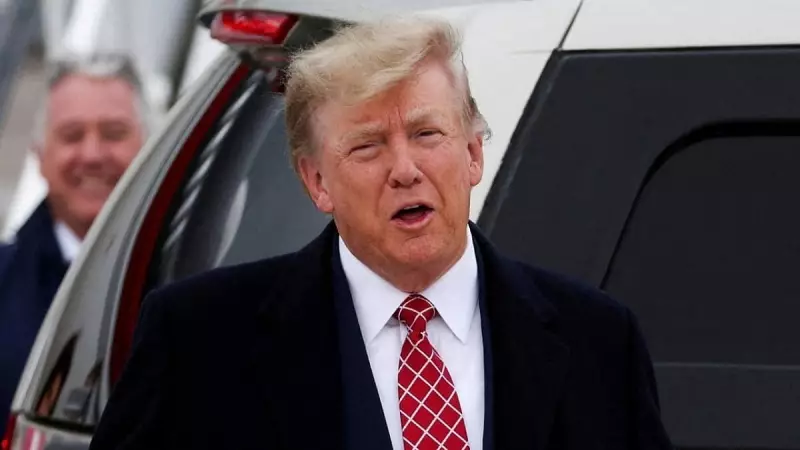
Former US President Donald Trump has indicated that American oversight of Venezuela's political and economic affairs could potentially continue for many years. This statement highlights the ongoing complexities in the relationship between the United States and the South American nation, which has been mired in a severe crisis.
The Context of Trump's Remarks
Trump's comments come against the backdrop of Venezuela's prolonged economic and political instability. The country, under the leadership of President Nicolas Maduro, has faced hyperinflation, widespread shortages of basic goods, and a significant humanitarian crisis leading to mass emigration. The United States, along with many other nations, has not recognized Maduro's 2018 re-election as legitimate, instead backing opposition leader Juan Guaido as the interim president for several years.
The former US president framed the potential for extended involvement around Venezuela's current state, suggesting the nation is "in very bad shape." His perspective implies that resolving the deep-seated issues within Venezuela is not a short-term endeavor and may require sustained international attention and pressure.

Implications of Prolonged US Involvement
The suggestion of a multi-year oversight role raises important questions about the future of US foreign policy in the region. It points to a strategy of continued diplomatic and economic pressure on the Maduro government. The primary tools of this policy have included stringent sanctions targeting Venezuela's crucial oil sector and key government officials.
This approach has had a tangible impact, further straining an economy already crippled by mismanagement. However, it has also been criticized for exacerbating the suffering of ordinary Venezuelan citizens. The debate continues on whether isolating the regime or engaging in dialogue is the more effective path to restoring democracy and stability.
Regional and Global Repercussions
Venezuela's situation is not an isolated one; it has significant implications for Latin America and global geopolitics. The crisis has led to one of the largest displacement crises in the world, affecting neighboring countries. Furthermore, Venezuela's alliances with other nations, including Russia and China, add a layer of great-power competition to the situation.
Trump's remarks underscore a view that Venezuela remains a persistent foreign policy challenge for Washington. The notion of a years-long commitment suggests that any resolution will be complex and protracted, involving not just a change in leadership but a comprehensive economic rebuilding and political reconciliation process.
As the international community watches, the path forward for Venezuela remains uncertain. The potential for extended US oversight indicates that the country's journey out of crisis will be a central issue in hemispheric relations for the foreseeable future, with profound consequences for its people and the region's stability.