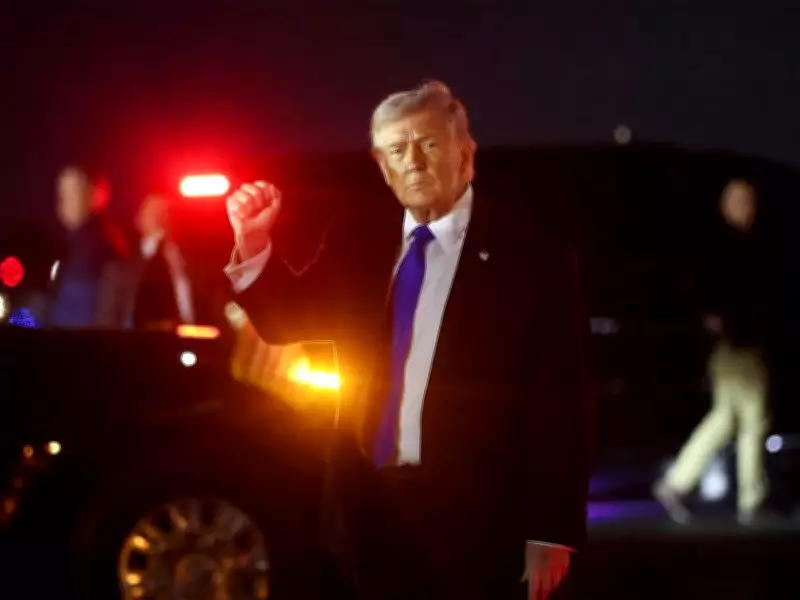
US President Donald Trump announced on Saturday that Washington may impose tolls on vessels passing through the Strait of Hormuz if a comprehensive agreement with Iran is not finalized within 60 days. In a post on Truth Social, Trump framed the potential levy as payment for US security services in the Middle East, stating it would be "for services rendered as the Guardian Angel" to the region.
Trump's Truth Social Post Details Toll Conditions
Trump clarified that no tolls would be charged during the 60-day ceasefire period established under the 14-point memorandum of understanding (MoU) signed between the US and Iran on Wednesday. The MoU aims to end hostilities between the two nations, reopen the Strait of Hormuz, and initiate broader negotiations, including on Iran's nuclear program. Trump wrote: "There will be NO TOLLS in the Hormuz Strait for 60 days during the Cease Fire Period, and there will be NO TOLLS after the 60 day period has expired, unless they are imposed by and for the United States of America, should the deal not be completed, for services rendered as the Guardian Angel to the countries of the Middle East for purposes of both past, present, and future reimbursement of costs."
Vice President Vance to Lead Talks in Switzerland
In parallel diplomatic moves, US Vice President JD Vance is expected to travel to Switzerland for negotiations with Iran, following the MoU signing. Axios reported that US envoys Steve Witkoff and Jared Kushner are already in Switzerland, where the first round of talks on a potential nuclear deal is scheduled for Sunday. The Iranian delegation left Tehran shortly after Iran's armed forces announced the closure of the Strait of Hormuz, citing alleged violations of the ceasefire by the US and Israel.

Iranian and Qatari Officials Join Negotiations
Iran's Foreign Minister Abbas Araghchi also traveled to Switzerland on Saturday. Iranian parliament speaker Mohammad Ghalibaf is expected to participate in the talks, according to Axios. Qatar's Prime Minister and Foreign Minister, Sheikh Mohammed bin Abdulrahman Al Thani, arrived in Switzerland on Friday, as Qatar serves as a key mediator between Washington and Tehran.
Strait of Hormuz Closure and US Response
Despite the ceasefire agreement, Iran announced the closure of the Strait of Hormuz on Saturday in response to continued Israeli strikes in Lebanon. The US Central Command reported that commercial ship traffic in the strait increased on Saturday, and that "US forces continued operating in the general area to support freedom of navigation." The situation remains fluid as diplomatic efforts continue alongside military posturing.