

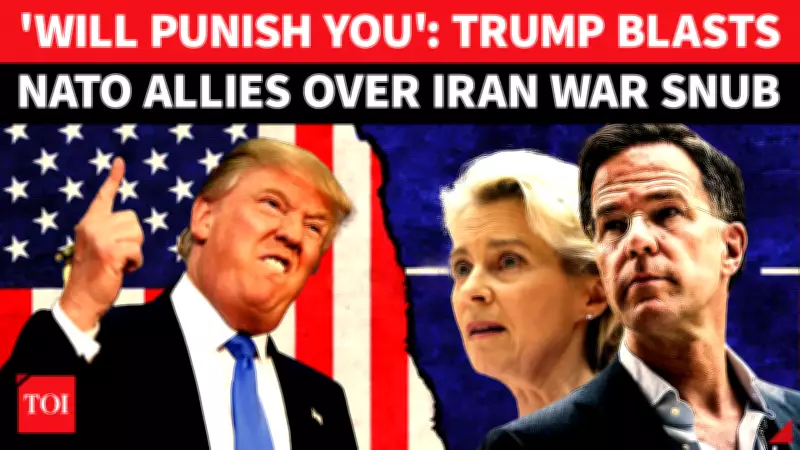
Trump Escalates NATO Tensions Over Iran War Stance
US President Donald Trump has dramatically intensified his criticism of North Atlantic Treaty Organization (NATO) allies regarding their positions on the ongoing Iran conflict. During a high-stakes meeting with NATO Secretary General Mark Rutte, Trump expressed significant anger and frustration over European nations limiting American military access to their strategic bases and airspace.
European Allies Take Diverging Positions
The transatlantic rift became particularly evident as key European nations adopted differing approaches to US military operations. Spain and Italy have implemented restrictions on American operational use of their military facilities, while the United Kingdom has carefully avoided direct involvement in the conflict. This fragmented response has created substantial diplomatic challenges within the alliance structure.
Trump issued a stern warning about potential consequences for what he characterized as allied "non-cooperation" in military matters. The president's language marked a significant escalation in rhetoric, raising concerns about the future cohesion of the Western military alliance during a period of international tension.

NATO Leadership Defends Alliance Unity
In response to the presidential criticism, NATO Secretary General Mark Rutte defended the organization's unity and collective approach. Rutte emphasized that most European partners have fulfilled their agreed-upon contributions to alliance security while maintaining open diplomatic channels with Washington.
The secretary general stressed the importance of continued dialogue between NATO members, even amid disagreements about specific military operations. This diplomatic balancing act reflects the complex nature of alliance politics during times of international conflict.
Broader Implications for Transatlantic Relations
The escalating tensions between the United States and its European allies come at a critical juncture in Middle Eastern geopolitics. The Iran conflict has exposed fundamental differences in strategic approaches between Washington and several European capitals regarding military intervention and diplomatic engagement.
Observers note that this dispute represents more than a simple policy disagreement—it potentially signals a deeper realignment in transatlantic security cooperation. The outcome of this diplomatic confrontation could have lasting implications for NATO's operational effectiveness and political cohesion in future international crises.
As the situation continues to develop, military analysts and diplomatic experts are closely monitoring how European nations will navigate their dual commitments to alliance solidarity and national sovereignty concerns. The resolution of this dispute may establish important precedents for how NATO members coordinate military operations in contested geopolitical environments.






