In a move that has reignited transatlantic tensions, former US President Donald Trump has floated the controversial idea of testing NATO's collective defense clause to address illegal immigration at America's southern border. This provocative suggestion comes just days after the United States announced the suspension of additional tariffs on eight European nations, highlighting the ongoing volatility in US-European relations.
A Provocative Proposal on Collective Defense
The 47th President of the United States took to social media to propose what many European leaders consider a radical reinterpretation of NATO's fundamental principles. "Maybe we should have put NATO to the test: Invoked Article 5, and forced NATO to come here and protect our Southern Border from further Invasions of Illegal Immigrants, thus freeing up large numbers of Border Patrol Agents for other tasks," Trump wrote in his characteristically direct style.
This remark landed at a particularly sensitive moment for European diplomacy. Leaders were just emerging from a tense summit in Brussels, where they had expressed relief that Trump had stepped back from his recent confrontation over Greenland. The autonomous Danish territory, which is part of NATO, had become a flashpoint after Trump publicly discussed the possibility of purchasing it and threatened tariffs against European allies.

European Confusion and Concern
The immediate crisis appeared to ease when Trump announced what he described as a "framework" agreement following discussions with NATO Secretary General Mark Rutte. While the former president claimed this arrangement delivered "everything we wanted," European officials found themselves searching for clarity about what had actually been agreed upon.
Greenland's Prime Minister Kim Kielsen stated he was unaware of any specific agreements, while Danish leaders emphasized that sovereignty matters were not negotiable. However, they did signal openness to revisiting a 1951 defense pact with Washington, demonstrating the complex balancing act European nations must perform in their relationship with the United States.
Questioning Alliance Norms and Commitments
Against this backdrop of diplomatic uncertainty, Trump's casual suggestion about repurposing Article 5 struck many European observers as emblematic of his broader approach to international alliances. European analysts viewed it as transactional, improvisational, and unconcerned with long-standing norms that have governed transatlantic relations for decades.
Article 5 has only been invoked once in NATO's history—following the September 11, 2001 terrorist attacks on the United States. Throughout Europe, this collective defense clause is regarded as the bedrock of security against external aggression, not as a tool for domestic political leverage or internal enforcement matters.
European Response and Strategic Calculations
During their Brussels summit, European Union leaders emphasized their commitment to defending European interests and resisting coercion, even as they continue to rely on American military support, particularly regarding security concerns in Ukraine. Several diplomats privately acknowledged that dealing with the Trump administration meant accepting a permanent state of uncertainty in transatlantic relations.
As one European diplomat succinctly put it, the continent remains "only a tweet away from the next crisis" when engaging with the unpredictable American leadership style.
The Davos Performance and Global Perception
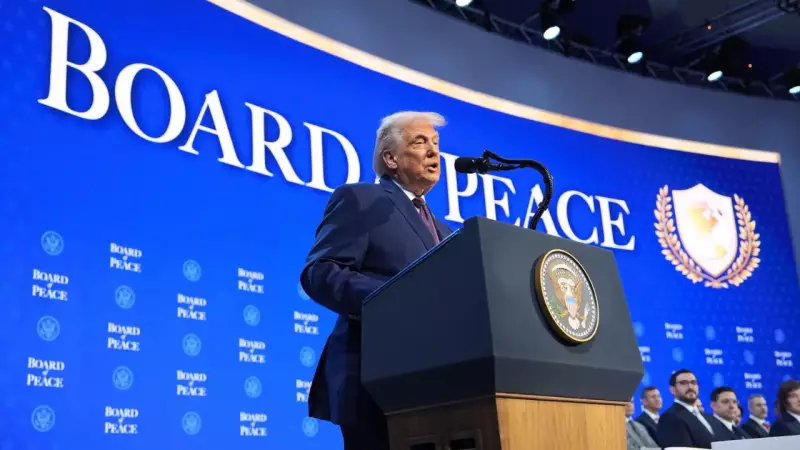
Trump's appearance at the World Economic Forum in Davos reinforced this sense of volatility in international affairs. After restating his interest in Greenland, he abruptly ruled out using military force, lifted tariff threats against European allies, and positioned himself as a global deal-maker. He even unveiled a new "Board of Peace" initiative that key allies quietly boycotted.
Whether this pattern of behavior represents calculated brinkmanship, political improvisation, or strategic retreat depends largely on who is asked. What remains clear is that Trump's latest Article 5 provocation has significantly deepened European anxiety about the durability of the transatlantic alliance that has underpinned Western security since World War II.

The suggestion that America might reinterpret its most sacred defense commitments to serve domestic political battles has raised fundamental questions about how far the United States is willing to bend alliance principles for unilateral interests. This development comes at a time when Europe faces multiple security challenges and continues to value the stability that NATO has traditionally provided.