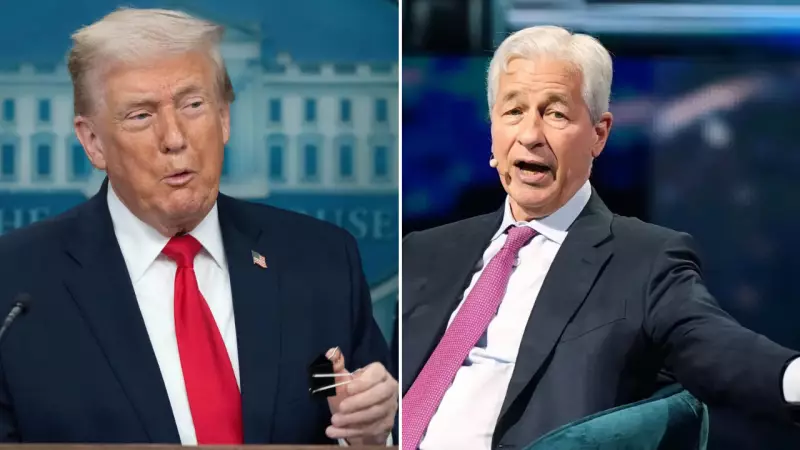
Former United States President Donald Trump has initiated a substantial $5 billion civil lawsuit against JPMorgan Chase and its CEO Jamie Dimon, accusing the financial giant of terminating his accounts for political motivations following his departure from the White House in 2021. The legal action, filed in the Miami-Dade County court in Florida, asserts that America's largest bank abruptly shut down multiple accounts associated with Trump and his business ventures in February 2021, providing only a brief 60-day notice without offering a comprehensive explanation.
Allegations of Financial and Reputational Harm
Trump contends that JPMorgan's decision resulted in severe financial losses and reputational damage, disrupting his business operations and compelling him to urgently transfer funds to alternative banking institutions under duress. According to the detailed complaint, the account closures occurred shortly after the January 6 attack on the US Capitol, during what Trump's legal team describes as a widespread trend among financial entities to dissociate from conservative personalities.
Claims of a Malicious Blacklist and Policy Violations
The lawsuit alleges that JPMorgan violated its own internal protocols by specifically targeting Trump to align with political currents. It further accuses CEO Jamie Dimon of supervising a harmful "blacklist" that purportedly cautioned other banks against engaging in business dealings with Trump, his family members, and entities under the Trump Organization umbrella.

Trump's legal documents reveal that he personally addressed the issue with Dimon after receiving the closure notification and was promised an investigation, but no subsequent follow-up occurred. Consequently, Trump claims he and his enterprises endured significant reputational harm, as they were forced to approach other financial institutions and clarify that they had been "debanked" without valid justification.
Political Motivations and Legal Accusations
Trump's attorneys argue that JPMorgan's actions were propelled by political and social agendas, characterizing the bank's citation of "reputational risk" as a pretext grounded in what they label unsubstantiated "woke" ideologies. The lawsuit includes accusations of trade libel against JPMorgan and alleges that Dimon breached Florida's Unfair and Deceptive Trade Practices Act, seeking substantial damages for the alleged misconduct.
JPMorgan's Firm Denial and Broader Industry Tensions
JPMorgan has vigorously refuted the allegations, stating that the case lacks merit and emphasizing that it does not close accounts based on political or religious affiliations. The bank clarified that account terminations only occur when they pose legal or regulatory risks, expressing regret over such actions but noting that regulatory requirements often leave limited alternatives.
This legal dispute emerges against a backdrop of escalating tensions between the White House and major banking institutions. Trump has recently criticized lenders over alleged debanking practices and proposed a 10 percent cap on credit card interest rates, a move that has faced strong opposition from the financial sector. Dimon warned this week that such a cap could restrict credit access and potentially lead to economic turmoil, highlighting the deepening rift between political figures and Wall Street.
The lawsuit underscores ongoing debates about financial discrimination and the intersection of banking with political dynamics, drawing attention to how institutions navigate reputational concerns in a polarized climate. As the case progresses, it may set precedents for how banks handle high-profile clients and address allegations of bias, with implications for both the financial industry and political discourse in the United States.