Trump Articulates Four-Point War Strategy Against Iran as Conflict Escalates
In a significant development, US President Donald Trump has publicly outlined four specific military objectives for the ongoing war with Iran. This move directly addresses mounting criticism that the United States had entered another Middle East conflict without a clearly defined endgame or strategic vision.
Four Clear Military Objectives Announced
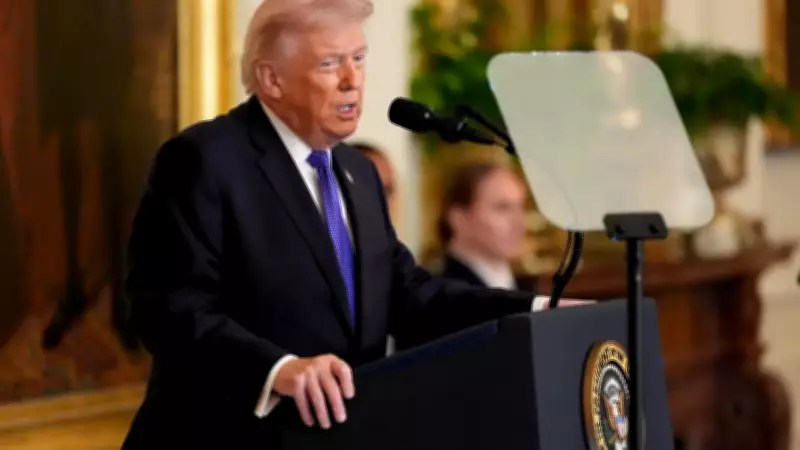
Speaking from the White House on Monday, President Trump declared that the joint US-Israeli offensive represents the "last, best chance" to strike decisively against a long-standing regional adversary. "Our objectives are clear," he stated emphatically before enumerating them point by point.
- Destroy Iran's missile capabilities to eliminate their offensive threat potential
- Annihilate Iran's naval forces to secure critical maritime routes
- Prevent Iran from obtaining nuclear weapons by ensuring they cannot rebuild their nuclear program
- Stop Iran from arming, funding, and directing terrorist groups beyond their borders
This marks the first instance where Trump has publicly framed the conflict around these four defined strategic goals. Previously, his administration had focused primarily on preventing Tehran from reconstituting its nuclear weapons program, with repeated warnings about Iran developing missiles capable of reaching the United States.

Intensified Military Operations Across Region
The presidential statement coincided with intensified US and Israeli military strikes across Iranian territory. These coordinated attacks have targeted:
- Ballistic missile sites and launch facilities
- Naval headquarters and maritime infrastructure
- Command-and-control centers critical to military operations
This latest campaign follows weekend attacks that resulted in the deaths of Supreme Leader Ayatollah Ali Khamenei and several other senior Iranian figures. These strikes prompted immediate Iranian retaliation through missile and drone attacks against Israeli targets and US military bases throughout the region. The conflict has now confirmed its first American military casualties.
Military Reinforcement and Strategic Positioning
At the Pentagon, General Dan Caine, Chairman of the Joint Chiefs of Staff, announced that the United States is reinforcing its Middle East presence with additional troops and advanced fighter aircraft. "This work is just beginning and will continue," he stated, adding that military forces would soon achieve the desired "total combat capacity and total combat power." General Caine declined to provide specific troop numbers for operational security reasons.
Earlier, Defense Secretary Pete Hegseth attempted to alleviate concerns about a prolonged military engagement. "This is not Iraq. This is not endless," he asserted, even as President Trump acknowledged the conflict might require four to five weeks of sustained operations if necessary to achieve the stated objectives.
Regional Repercussions and Economic Impact
The escalating conflict has created significant reverberations throughout the Middle East region. Iran has conducted retaliatory strikes against targets in Israel and several Gulf states, while global oil prices have surged amid growing concerns about potential disruptions to shipping through the strategically vital Strait of Hormuz.
The situation remains fluid with Gulf nations vowing to defend themselves against potential Iranian aggression, creating a complex multi-front conflict scenario that continues to evolve rapidly.