Trump Orders Military Deployment to Strait of Hormuz Amid Rising Tensions
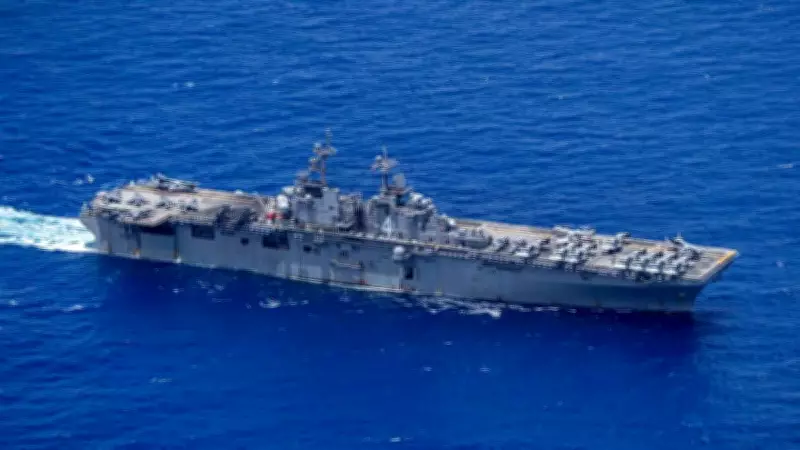
In a significant move that underscores escalating geopolitical tensions, former President Donald Trump has authorized the deployment of military forces to the Strait of Hormuz. This strategic decision involves sending the USS Tripoli, a formidable warship, to the region, accompanied by approximately 2,000 United States Marines. The deployment is aimed at bolstering security and ensuring open access to this critical maritime chokepoint, which is vital for global oil shipments.
USS Tripoli: A Key Asset in the Middle East Mission
The USS Tripoli, an amphibious assault ship, is now en route to the Middle East as part of this military initiative. This vessel is equipped with advanced capabilities, including the capacity to support Marine operations and provide logistical support in volatile environments. The presence of 2,000 Marines aboard the ship highlights the scale of this deployment, signaling a robust response to potential threats in the area.
This move comes at a time of heightened instability in the region, with ongoing conflicts and diplomatic strains influencing global security dynamics. The Strait of Hormuz, located between the Persian Gulf and the Gulf of Oman, is a narrow waterway through which a substantial portion of the world's oil supply passes. Ensuring its openness is crucial for international trade and energy security, making this deployment a focal point of international attention.

Strategic Implications and Global Reactions
The decision to deploy military assets to the Strait of Hormuz is not without controversy. It reflects a proactive stance by the Trump administration in addressing perceived threats to maritime freedom. Analysts suggest that this action could deter adversarial activities and reinforce U.S. commitments to its allies in the Middle East. However, it also raises concerns about potential escalations and the broader impact on regional stability.
Global observers are closely monitoring the situation, as the deployment could influence diplomatic relations and military posturing in the area. The involvement of such a significant number of Marines indicates a readiness for various scenarios, from humanitarian missions to defensive operations. This development underscores the complex interplay of military strategy and international politics in one of the world's most sensitive regions.
Background and Context of the Deployment
Historically, the Strait of Hormuz has been a flashpoint for tensions, with incidents involving naval confrontations and blockades affecting global markets. The Trump administration's move aligns with a broader pattern of assertive foreign policy aimed at safeguarding U.S. interests abroad. By sending the USS Tripoli and Marines, the administration is emphasizing its capability to project power and respond swiftly to emerging challenges.
This deployment is part of a series of military adjustments in the Middle East, reflecting ongoing efforts to adapt to evolving security landscapes. As the USS Tripoli heads towards its destination, the international community awaits further developments, with many hoping for a peaceful resolution to the underlying issues driving such military maneuvers.