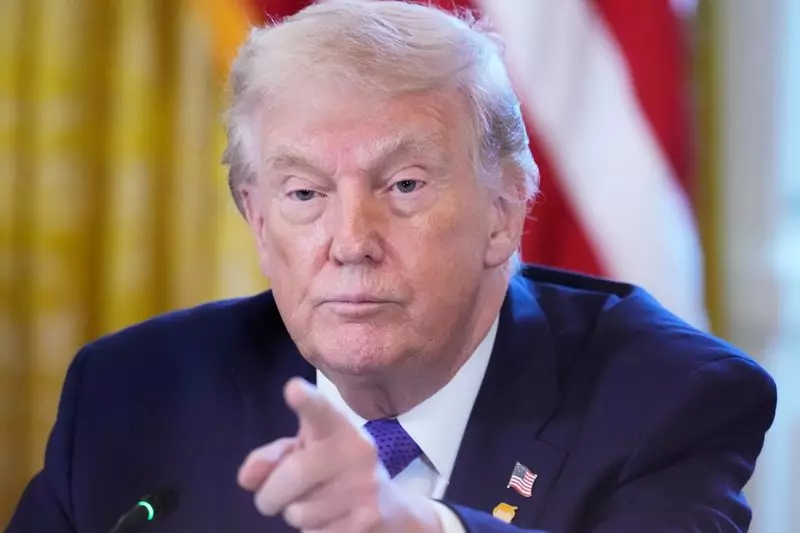
Former US President Donald Trump has once again brought a critical moment in South Asian geopolitics into the American election discourse. He repeated his claim of personally intervening to de-escalate a tense military standoff between India and Pakistan. In the same breath, he took a sharp jab at his predecessor, questioning the merits of Barack Obama's Nobel Peace Prize win.
The Core Claim: Averting a South Asian War
Addressing a rally in Richmond, Virginia, Trump recounted the period following the February 2019 Pulwama terror attack in Jammu and Kashmir. The attack, which killed 40 Indian security personnel, was claimed by the Pakistan-based Jaish-e-Mohammed. Trump stated that the situation was extremely volatile, with India preparing for a major retaliatory strike.
"I stopped a war. I stopped a war between India and Pakistan," Trump asserted. He described receiving calls from leaders of both nations, whom he characterized as being "ready to go" for a full-scale conflict. According to his narrative, his direct intervention and dialogue with both sides helped calm the situation and prevent a wider war.

This claim references the period after India's Balakot airstrike on a JeM camp inside Pakistan in February 2019 and the subsequent aerial engagement where an Indian pilot was captured. The situation indeed brought the two nuclear-armed neighbors to a dangerous brink, with intense diplomatic efforts underway globally to prevent escalation.
The Political Dig: Questioning Obama's Nobel
Trump seamlessly connected his claimed foreign policy success to domestic political criticism. He contrasted his actions with those of former President Barack Obama, who was awarded the Nobel Peace Prize in 2009 shortly after taking office.
"And Obama didn't even know what he got it for," Trump said, echoing a long-standing critique from his political circle. He framed the prestigious award as being given prematurely, without substantial peacekeeping achievements to justify it. The implication was clear: his own unrewarded actions in stopping a potential war between India and Pakistan demonstrated more concrete peacemaking than Obama's early-term Nobel.
This comparison is a recurrent theme in Trump's rhetoric, where he often positions his "deal-making" and personal diplomacy as more effective than traditional statecraft or the achievements of previous administrations.
Context and Recurring Narrative
This is not the first time Trump has made this claim. He has mentioned it several times in past speeches and interviews, often adding colourful details about the intensity of the conflict he allegedly helped defuse. The narrative serves multiple purposes in his political messaging:
- Establishes his image as a global dealmaker capable of resolving intractable international disputes.
- Appeals to a segment of Indian-American voters by highlighting his perceived role in a moment of national security concern for India.
- Reinforces his critique of the Democratic establishment by juxtaposing his actions with Obama's Nobel award.
While the exact nature and extent of Trump's personal involvement in the 2019 de-escalation have been debated by analysts and former officials, the episode remains a significant part of his self-portrayal on the foreign policy stage. His latest comments ensure that his version of events continues to circulate in the public domain, especially as he campaigns for a potential return to the White House.
The remarks also inadvertently keep the spotlight on the fragile relationship between India and Pakistan, a perennial flashpoint that requires constant diplomatic management. By recalling the events of 2019, Trump's statement underscores the ever-present potential for escalation in the region and the perceived importance of US diplomatic engagement there.