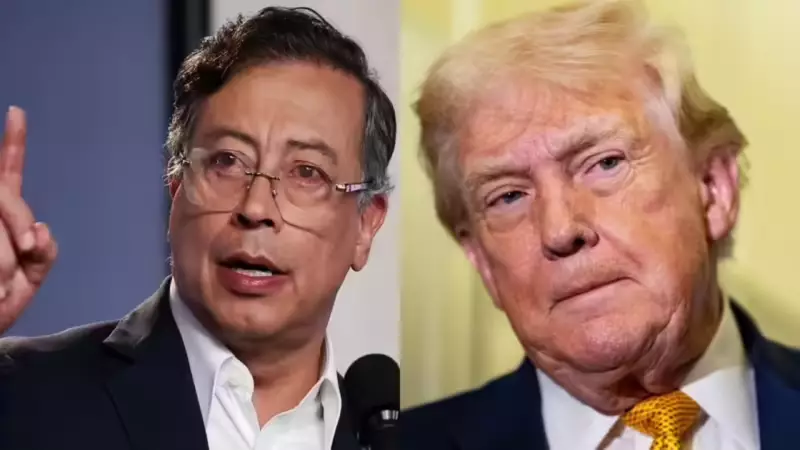
In a significant diplomatic development, US President Donald Trump and Colombian President Gustavo Petro have held their first direct telephone conversation, lasting 35 minutes. This high-stakes call comes just days after a public exchange of harsh accusations, including Trump alleging Petro was involved in drug trafficking and hinting at potential US military action in Latin America.
A Call to Mend Fences After Public Spat
The conversation, described by the Colombian government as "good and positive," marks a potential thaw in recently strained ties. President Trump announced the call on his social media platform, Truth Social. He stated it was a "Great Honor" to speak with President Petro, who had called to explain the situation regarding drugs and other disagreements between the two nations.
Trump confirmed plans for an in-person meeting, with arrangements being made between US Secretary of State Marco Rubio and Colombia's Foreign Minister. The summit is scheduled to take place at the White House in Washington, DC. Trump noted he appreciated Petro's call and tone, looking forward to meeting him in the near future.

Background of Escalating Tensions
The diplomatic call occurred against a backdrop of severe tension. Recently, President Trump had publicly labelled Petro a "sick man who likes making cocaine and selling it to the United States." In a concerning escalation, Trump had also suggested he supported military action against Colombia when questioned by a reporter.
The situation intensified when President Petro responded to US military strikes in Venezuela. He issued a stark warning about defending Colombia's sovereignty, stating, "If you bomb peasants, thousands of guerrillas will return to the mountains." He further cautioned that any attempt to arrest him would "unleash the popular jaguar." As a protective measure, Petro deployed 30,000 Colombian soldiers to guard the border with Venezuela last Sunday.
Broader Context of Trump's Latin America Policy
President Trump's tough rhetoric was not isolated to Colombia. He has also threatened to deploy US military forces to pursue drug cartel leaders in Mexico. Additionally, he suggested that Cuba's government might collapse without support from Venezuela, indicating a broader, aggressive posture towards left-leaning governments in the region.
The agreement to meet face-to-face suggests both leaders are seeking to de-escalate the situation. While the core disagreements on drug policy and sovereignty remain, the planned White House meeting opens a channel for direct diplomacy. The world will be watching closely to see if this call leads to a sustained dialogue or merely a temporary pause in hostilities between the two allied nations.