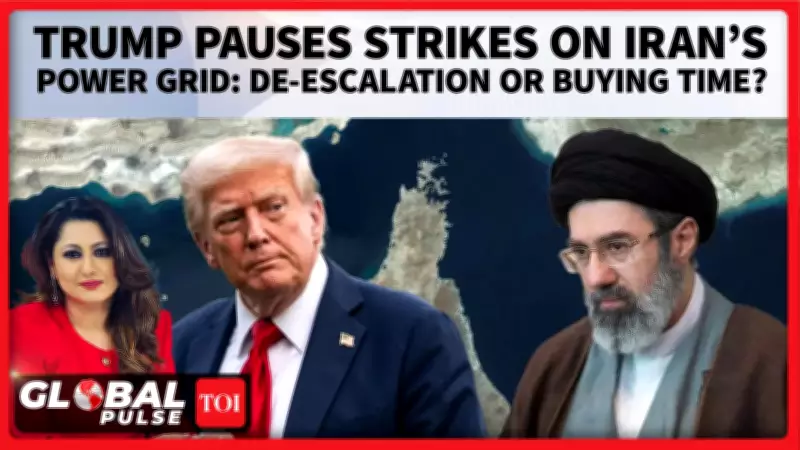
Trump Halts Planned Strikes on Iran's Power Grid, Cites 'Very Good Talks'
In a significant development amid escalating tensions, US President Donald Trump has announced a five-day delay in planned military strikes targeting Iran's power grid infrastructure. The decision, revealed on March 23, 2026, comes as Trump described ongoing diplomatic exchanges as "very good talks," suggesting a potential pathway toward de-escalation in the volatile Middle East region.
Tehran's Defiant Response: Accusations of US 'Backing Down'
Iranian officials in Tehran have swiftly rejected President Trump's characterization of productive dialogue, instead mocking the United States and accusing Washington of "backing down" from its threats. Iranian state media and government spokespersons have labeled the delayed strikes as a bluff, asserting that the move stems from American fear rather than genuine diplomatic progress.
The Iranian Revolutionary Guard Corps (IRGC) has been particularly vocal, issuing direct messages that taunt Trump and highlight perceived failures in US military posturing in the strategic Strait of Hormuz. This rhetoric aligns with Tehran's broader narrative of resilience and capability, as Iran continues to showcase advanced military assets, including drones and missile systems.

Context of Escalating Regional Conflict
The pause in US strike plans occurs against a backdrop of intensifying regional hostilities. Recent weeks have seen:
- Hezbollah launching over 60 rocket, drone, and artillery attacks on northern Israel, resulting in casualties.
- Pro-Iran Iraqi resistance groups escalating drone strikes against US and Israeli targets.
- Iran revealing a "four-point punitive measure" and warning of consequences if US deadlines are not met.
- China issuing warnings about the deepening Hormuz crisis, highlighting international concerns.
These developments underscore the complex geopolitical landscape, where US-Iran tensions intersect with broader conflicts involving Israel, Arab nations, and non-state actors. The US has faced pressure to withdraw troops from certain Arab nations following Iranian-linked attacks, adding another layer to the strategic calculus.
Strategic Implications and Global Reactions
Analysts are divided on whether Trump's delay represents a genuine de-escalation effort or a tactical maneuver. Some view it as a strategic pause to reassess options and avoid immediate escalation, while others interpret it as a response to mounting international and domestic pressures. The move has sparked questions about the sustainability of US threats and the potential for renewed hostilities if talks falter.
Global observers are closely monitoring the situation, given Iran's assertions of long-range missile capabilities targeting European cities and its offers to counter US interests in regions like Greenland. The interplay of military posturing, diplomatic gestures, and propaganda warfare continues to shape the crisis, with implications for energy security, regional stability, and international alliances.
As the five-day window unfolds, the world watches to see whether "very good talks" can translate into tangible reductions in tension or whether the drumbeat of war will resume with greater intensity.