Trump Signals Willingness for Ground Troop Deployment in Iran
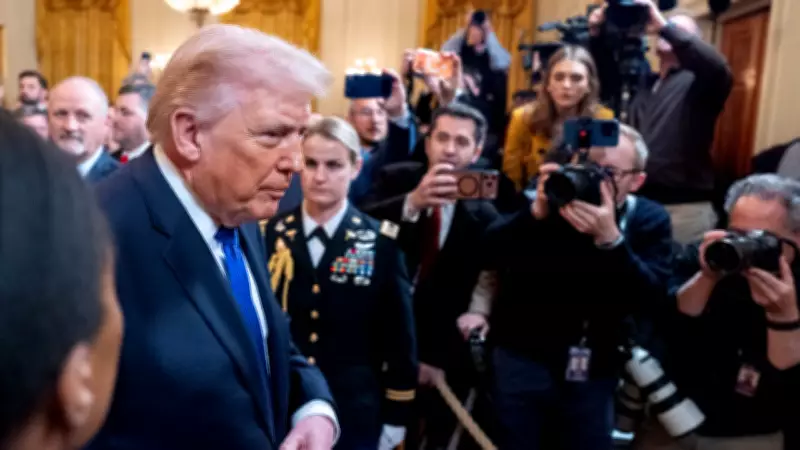
In a significant statement regarding US military strategy, President Donald Trump has declared that he would not exclude the possibility of deploying 'boots on the ground' in Iran should the situation escalate. This remark came during an interview with the New York Post on Monday, following recent military operations against Iran over the weekend.
Trump's Military Options Remain Open
President Trump emphasized that he is keeping all military avenues available, contrasting his stance with previous presidents who often ruled out ground troop deployments. "I don't have the yips with respect to boots on the ground — like every president says, 'There will be no boots on the ground.' I don't say it," Trump told the NY Post in one of several brief interviews since Saturday's action.
He further clarified that while ground troops would "probably" not be necessary, he stressed they could be utilized if required. "I say 'probably don't need them,' [or] 'if they were necessary,'" he added, highlighting a flexible approach to military engagement.

Understanding 'Boots on the Ground'
The phrase "boots on the ground" is a widely recognized military expression that refers to the deployment of combat troops physically present in a foreign country. This contrasts with relying solely on remote methods such as airstrikes, drones, or naval forces. In simpler terms, it means sending soldiers into active combat zones to engage directly with enemy forces.
Linguistically, this phrase is an example of synecdoche — a figure of speech where a part (boots) represents the whole (soldiers). This usage has been prevalent in military and political discourse for decades.
Historical Context and Usage
The phrase has been employed by various world leaders, including Barack Obama and David Cameron, particularly during debates over military interventions in conflicts such as Iraq, Afghanistan, and Syria. Its origins can be traced back to informal military slang, where "boot" was sometimes used to refer to a soldier during World War I, and military training became known as "boot camp."
A similar expression, "Feet on the Ground," appeared in a 1966 book by British counter-insurgency expert Sir Robert Grainger Ker Thompson, discussing Malaya and Vietnam. However, the earliest confirmed use of the exact phrase "boots on the ground" dates to 1980, during the Iranian hostage crisis, making it particularly relevant in the current context of US-Iran tensions.
This historical backdrop adds depth to Trump's comments, as it connects past military strategies with present-day geopolitical considerations. The phrase encapsulates the tangible commitment of troops in conflict zones, a decision that carries significant political and humanitarian implications.
As global observers monitor the evolving situation, Trump's openness to ground troop deployment underscores the volatile nature of US-Iran relations and the broader Middle East dynamics. The potential for escalated military action remains a critical point of discussion in international affairs, with implications for regional stability and global security.