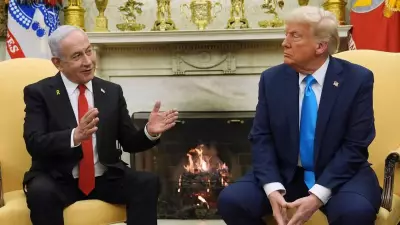
In a striking address to Republican lawmakers, former US President Donald Trump combined sharp criticism of captured Venezuelan leader Nicolás Maduro with high praise for the American armed forces. The remarks, made on Tuesday, January 6, at a GOP retreat in Washington D.C., focused on the recent military operation that led to Maduro's apprehension.
Mockery and Accusations: Trump's Take on Maduro
Donald Trump did not mince words when discussing Nicolás Maduro. He pointedly mocked the Venezuelan president's public demeanour, suggesting Maduro attempts to imitate his dance style. "He gets up there and tries to imitate my dance a little bit, but he's a violent guy," Trump told the gathering of House Republicans.
The former president levelled severe allegations against Maduro's regime, accusing him of being responsible for the deaths of "millions of people." He further claimed that Venezuela operated "a torture chamber in the middle of Caracas," painting a grim picture of the leader's rule.

Hailing American Military Might
Trump swiftly pivoted from the criticism to celebrate the success of the US-led operation. He used the opportunity to extol the capabilities of the United States military, declaring it unmatched globally. "The operation showed America has the most powerful, most lethal, most sophisticated, and most fearsome military on planet earth — and it's not even close," he asserted, adding that "Nobody could've done that."
This operation was the culmination of a prolonged pressure campaign involving a military buildup off the coast of South America and targeted strikes on vessels suspected of drug trafficking links.
Congressional Debate Over Presidential Powers Reignited
The capture of Maduro has sparked a fresh and intense debate in Washington regarding the limits of presidential war powers and the role of Congress in authorising military action. The issue was a central topic in a closed-door briefing on Capitol Hill on Monday, January 5.
Senior administration officials, including Secretary of State Marco Rubio, Defense Secretary Pete Hegseth, CIA Director John Ratcliffe, Attorney General Pam Bondi, and Joint Chiefs Chairman Gen. Dan Caine, led the briefing. Lawmakers from both parties sought clarity on the mission, which they stated was launched without advanced warning to Congress.
Following the briefing, House Speaker Mike Johnson came to the defense of the operation's legality. "We are not at war. We do not have U.S. armed forces in Venezuela, and we are not occupying that country," Johnson stated. He emphasised that while Congress holds the power to declare war, the Constitution grants the president "vast authorities as commander in chief."
Speaker Johnson also clarified the operation's objectives, stressing it was not aimed at 'regime change' but rather at compelling "a demand for change in behavior by a regime." He assured that lawmakers do not anticipate a deployment of US ground troops or direct involvement beyond applying pressure on the interim government now established in Venezuela.