In a significant development for global economic governance, President Donald Trump has announced his intention to nominate former Federal Reserve governor Kevin Warsh as the next chair of the Federal Reserve. This move would see Warsh replace the current chair, Jerome Powell, whose term is set to expire in May. The announcement, made on Friday, underscores a potential shift in the direction of the powerful central bank, with implications for monetary policy and its traditional independence from political influence.
A Return to the Federal Reserve
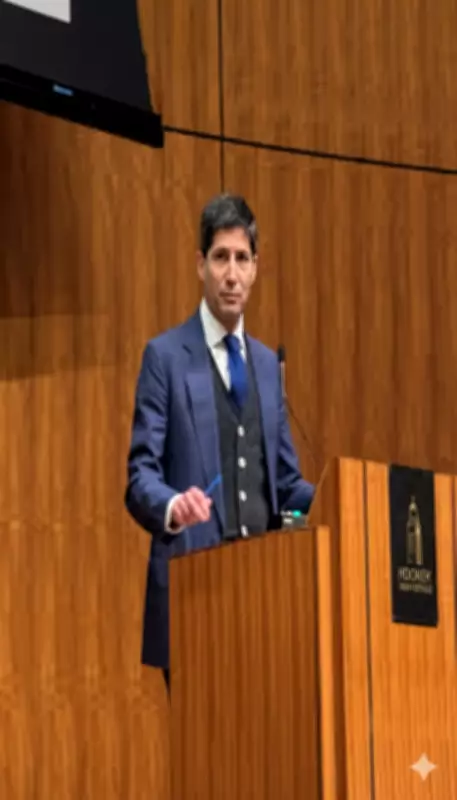
The nomination of Kevin Warsh marks a notable return to the Federal Reserve for the 55-year-old economist. Warsh previously served as a member of the Fed's board from 2006 to 2011, during which time he was the youngest governor in history at his appointment at age 35. Currently, he holds positions as a fellow at the right-leaning Hoover Institution and a lecturer at the Stanford Graduate School of Business. His appointment, however, requires confirmation by the Senate, a process that will be closely watched given the high stakes involved.
Potential Policy Shifts and Political Alignment
Warsh's nomination is seen as a move that could bring the Federal Reserve closer to the White House, potentially reducing its longstanding independence from day-to-day politics. This is particularly significant as Trump has publicly criticized Jerome Powell for not cutting interest rates quickly enough, despite having chosen him to lead the Fed in 2017. Trump has advocated for the Fed's key rate to be as low as 1 percent, far below the current level of approximately 3.6 percent, a stance that few economists endorse.

Historically, Warsh has been known as a hawk in Fed parlance, typically supporting higher interest rates to control inflation. During his tenure as governor, he objected to some of the low-interest rate policies implemented during and after the 2008-09 Great Recession and expressed concerns about accelerating inflation, even though it remained low for years post-recession. However, in more recent speeches and opinion columns, Warsh has indicated support for lower rates, aligning more closely with Trump's economic agenda.
Economic Implications and Broader Context
The chair of the Federal Reserve is one of the most powerful economic officials globally, tasked with combating inflation in the United States while supporting maximum employment. The Fed's rate decisions influence borrowing costs across the economy, affecting mortgages, car loans, and credit cards. Trump's nomination of Warsh follows an extended and unusually public search, highlighting the importance of this decision to the president and its potential impact on the economy.
Since Trump's reelection, Warsh has expressed support for the president's economic policies, including deregulatory measures and cutbacks in government spending, which he argues could reduce inflationary pressures. Lower inflation would, in turn, allow the Fed to implement the rate cuts that Trump desires. This alignment marks a departure from Warsh's history as a more conventional, pro-free trade Republican.
Challenges to Fed Independence
Trump's approach to the Federal Reserve has broken with decades of precedent, where presidents avoided publicly calling for rate cuts out of respect for the Fed's independence. In August, Trump attempted to fire Lisa Cook, one of the seven governors on the Fed's board, in an effort to secure a majority. Cook sued to retain her position, and the Supreme Court recently appeared inclined to allow her to stay while her case is resolved. Economic research suggests that independent central banks are more effective at controlling inflation, as elected officials often push for lower rates to stimulate growth, which can lead to higher prices.
Trump has stated that he wants a Fed chair who will cut interest rates to reduce the borrowing costs associated with the federal government's substantial $38 trillion debt and to boost sluggish home sales, which have been hindered by higher mortgage costs. However, it is important to note that the Fed does not directly set longer-term interest rates for items like home and car purchases.

For now, Warsh is expected to fill a seat on the Fed's governing board that was temporarily occupied by Stephen Miran, a White House adviser appointed by Trump in September. Once confirmed to the board, Trump could then elevate Warsh to the chair position when Powell's term concludes in May, setting the stage for a new chapter in U.S. monetary policy.