Fresh diplomatic strains have erupted between United States President Donald Trump and key European allies, creating renewed transatlantic tension just as relations appeared to be stabilizing following recent friction over Greenland. The latest rupture centers on President Trump's provocative remarks questioning NATO allies' frontline contributions in Afghanistan and casting doubt on whether the alliance would defend the United States during a crisis. These comments have sparked significant anger and condemnation from London to Warsaw, reopening sensitive discussions about military sacrifices and alliance commitments.
Trump's NATO Doubts Reopen Old Wounds
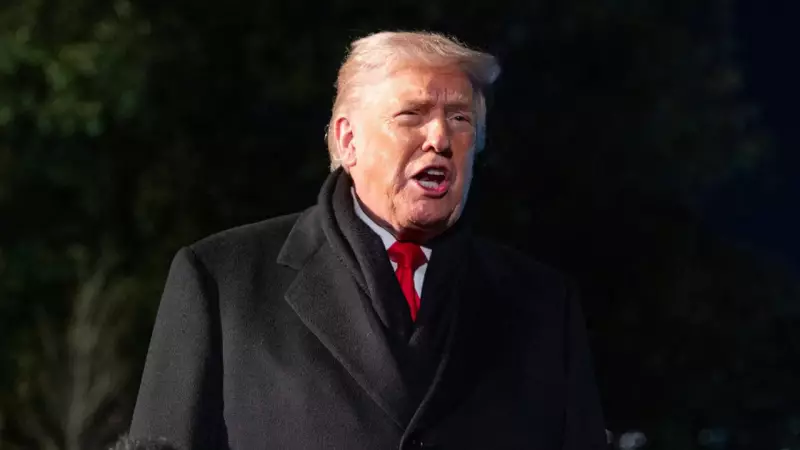
In a recent interview with Fox News, President Trump made controversial statements about NATO partners' involvement in Afghanistan. "They'll say they sent some troops to Afghanistan," Trump remarked before adding, "And they did, they stayed a little back, a little off the front lines." The President further repeated his long-standing doubts about NATO solidarity, stating he was "not sure" the alliance would meet what he called the "ultimate test" of defending the United States during a crisis.
These remarks have reopened old wounds across Europe, where Afghanistan is widely viewed as the clearest demonstration of allied support for Washington following the September 11 attacks. NATO's Article 5 collective defense clause, which represents the alliance's core principle, was invoked for the first and only time after the 2001 terrorist attacks, leading European forces to join the United States-led war in Afghanistan. The questioning of these contributions has struck a particularly sensitive nerve among nations that suffered significant casualties during the two-decade conflict.

British Backlash and Political Condemnation
United Kingdom Prime Minister Keir Starmer led the immediate backlash against President Trump's comments, describing them as "insulting and frankly, appalling." In a strongly worded video message, Starmer began by paying tribute to the 457 British armed service members who lost their lives in Afghanistan. "There are many also who were injured, some with life-changing injuries," Starmer emphasized, "and so I consider President Trump's remarks to be insulting and frankly, appalling, and I'm not surprised they've caused such hurt to the loved ones of those who were killed or injured."
The Prime Minister added that if he had misspoken in such a manner, he "would certainly apologize," highlighting the emotional impact of Trump's statements on military families. British political figures across party lines echoed this criticism, creating rare bipartisan unity in their condemnation. UK Defence Minister John Healey described fallen soldiers as "heroes who gave their lives in service of our nation," while Armed Forces Minister Al Carns called the remarks "utterly ridiculous."
Opposition leader Kemi Badenoch labeled the comments "complete nonsense," and even Trump's political ally Nigel Farage acknowledged that "Donald Trump is wrong" in this instance. This widespread British condemnation reflects the deep sensitivity surrounding Afghanistan service and sacrifices within the United Kingdom, where more than 150,000 personnel served during the twenty-year mission.
European Reminders of Military Sacrifices
Other European leaders pointed directly to their own nations' losses in Afghanistan, emphasizing the tangible sacrifices made in support of the NATO alliance. Poland's defence minister stated he expected respect for veterans "who have proven how much they serve this country and our commitments to allies." French officials noted that ninety of their soldiers died in Afghanistan, declaring, "We remember their sacrifice, which commands respect."
NATO Secretary General Mark Rutte directly countered President Trump's doubts about alliance solidarity, stating unequivocally: "You can be assured, absolutely, if ever the United States was under attack, your allies will be with you." Rutte reminded Washington that for every two Americans killed in Afghanistan, one soldier from another NATO country also died, highlighting the shared burden of the conflict.

The human cost of the Afghanistan mission extends beyond British casualties to include personnel from Canada, Denmark, France, Germany, and numerous other NATO countries. These collective sacrifices represent the practical implementation of the Article 5 commitment that President Trump has questioned, creating particular frustration among European governments that view their contributions as demonstrating unwavering alliance solidarity.
Broader Context of Transatlantic Tensions
The Afghanistan dispute emerges just days after President Trump again pressed Denmark over Greenland, warning Copenhagen to "say yes" to United States ambitions regarding the territory. Combined with ongoing tariff threats and public criticism of allied leaders, this approach is reinforcing European concerns about a more transactional United States foreign policy that questions long-standing alliance commitments.
Speaking at the World Economic Forum in Davos, Canadian Prime Minister Mark Carney warned that middle powers must work together in this changing geopolitical landscape. "If you are not at the table, you are on the menu," Carney remarked, in comments widely interpreted as a call for countries to hedge against United States unpredictability and protect their strategic interests through enhanced international cooperation.
This latest diplomatic episode represents more than just rhetorical disagreement—it reflects deepening concerns about the future of transatlantic relations and the fundamental principles that have underpinned NATO since its establishment. As European leaders unite in their defense of alliance solidarity and military sacrifices, the episode highlights growing anxieties about United States commitment to multilateral security frameworks that have defined Western defense policy for generations.