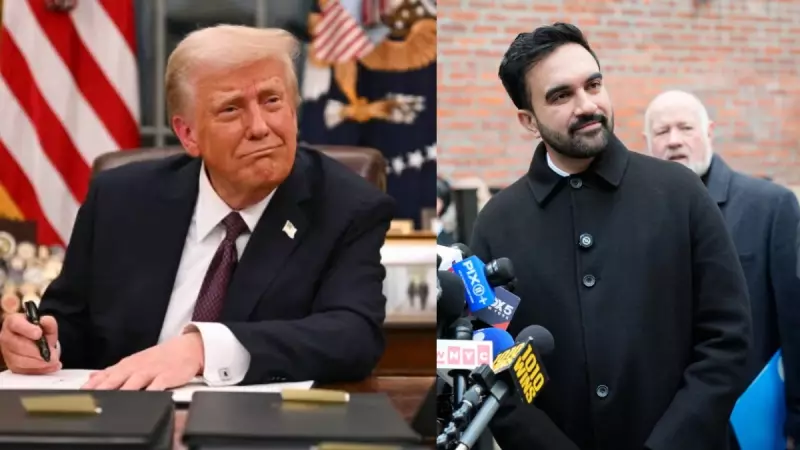
In a remarkable political development that has captured national attention, former President Donald Trump is set to host New York City's openly communist Mayor Zohran Mamdani at the White House. This unprecedented meeting between two figures from opposite ends of the political spectrum promises to be one of the most watched political events of the year.
The Unlikely Meeting of Political Opposites
The scheduled meeting between Donald Trump and Zohran Mamdani represents a significant moment in American politics. The discussion is planned for November 20, 2025, at the White House, bringing together one of America's most prominent conservative figures with one of its most progressive municipal leaders. Mamdani, who identifies as a communist and represents parts of Queens in the New York State Assembly, has been a vocal critic of Trump's policies throughout his political career.
This encounter marks the first time a sitting U.S. president will formally engage with an American communist elected official at this level. The meeting comes amid growing political tensions and increasing polarization across the country. Both figures have maintained strongly opposing views on numerous policy matters, including economic systems, foreign policy approaches, and domestic governance principles.

Background of the Key Participants
Zohran Kwame Mamdani, the 31-year-old Democratic Socialist who has openly embraced communist principles, has been making waves in New York politics since his election. Born in Kampala, Uganda, and raised in New York City, Mamdani has emerged as a prominent voice on the left wing of American politics. His political platform has focused heavily on housing justice, workers' rights, and radical economic reform.
Donald Trump, the 45th President of the United States, needs little introduction in political circles. His presidency from 2017 to 2021 was marked by conservative policies, tax reforms, and a distinctive approach to international relations. The meeting occurs during what political analysts describe as a crucial period in American politics, with both major parties grappling with internal ideological conflicts.
Potential Discussion Topics and Political Implications
The agenda for the Trump-Mamdani meeting is expected to cover several critical issues facing New York City and the nation. Urban policy, economic development, and infrastructure spending are likely to feature prominently in their discussions. Given Mamdani's advocacy for public housing and social programs, these topics represent areas where their ideological differences will be particularly evident.
Political observers are watching this meeting closely for several reasons. The encounter could signal a new approach to political dialogue across ideological divides, or it might simply highlight the vast gulf between competing political philosophies. Some analysts suggest the meeting could have implications for Trump's political strategy heading into future elections, particularly regarding urban voters and progressive constituencies.
The meeting also raises questions about the evolving nature of political discourse in America. In an era marked by intense political polarization, the willingness of figures from such different political backgrounds to engage in formal dialogue could set an important precedent. However, both leaders face potential backlash from their respective bases for participating in this unprecedented political engagement.
Broader Context and Public Reaction
Reactions to the announced meeting have been predictably mixed across the political spectrum. Conservative commentators have expressed concern about normalizing communist ideology within American political discourse, while progressive voices have questioned the strategic value of engaging with Trump. Meanwhile, moderate observers have generally welcomed the prospect of dialogue across political divides.
The meeting occurs against the backdrop of increasing political experimentation at the municipal level, with several American cities adopting policies that challenge conventional political wisdom. Mamdani's presence in New York City politics represents part of this broader trend, which has seen self-described socialists and progressives gaining influence in urban governance.

As the meeting date approaches, both parties are preparing for what promises to be a significant moment in contemporary American politics. The outcome of their discussion could influence political strategies, policy approaches, and inter-party dialogue for years to come. Regardless of the immediate results, the very occurrence of this meeting marks a notable development in the nation's political landscape.