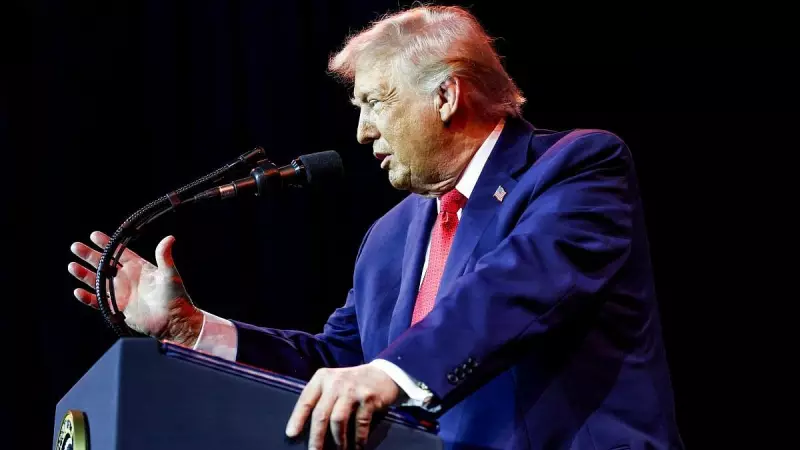
In a statement that has sent shockwaves through diplomatic circles, former and potential future US President Donald Trump has articulated a vision of American power that places his personal judgment above established international legal frameworks. The remarks, made on January 9, 2026, suggest a dramatic shift in how the United States might engage with the world under a potential second Trump administration.
A Doctrine of Personal Morality Over Global Rules
When questioned about the role of international law for his administration, Trump's initial response was blunt: 'I don't need international law.' He proposed that his decisions on the global stage would be primarily restrained by his 'own morality'. This assertion positions the former president as the ultimate arbiter of right and wrong in foreign affairs, potentially sidelining treaties, alliances, and multilateral agreements that have shaped US global leadership for decades.
Following further pressing, Trump did concede that his administration would, in fact, need to abide by international law, stating, 'I do.' However, he immediately clarified this statement, making it clear that he himself would decide when such legal constraints would apply to the United States. This creates a scenario where adherence to global norms becomes discretionary, based on the sitting president's personal interpretation and interests at any given time.

Implications for Global Order and India's Stakes
This 'America First' doctrine, taken to its logical extreme, has profound implications. For a nation like India, which operates within a complex web of international treaties on trade, climate, security, and maritime law, a US unilaterally opting in or out of global rules creates significant uncertainty. Key areas of partnership, from defense contracts to technology sharing and climate finance, could become subject to the whims of a single leader's 'morality' rather than predictable, rules-based engagement.
The timing of these comments, in early 2026, is also critical. They come as the world grapples with multiple conflicts and challenges that require robust international cooperation. Trump's vision suggests a move towards a more transactional and volatile form of diplomacy, where long-standing partnerships could be re-evaluated or abandoned based on immediate perceived benefits to the US, as defined solely by the President.
Reactions and the Road Ahead
While supporters may applaud this as a strong stance against perceived globalism, critics and allies alike are alarmed. Legal experts warn that undermining the international rules-based order erodes global stability and makes conflict more likely. For India, navigating this potential future requires careful diplomatic planning to protect its national interests in a world where the traditional superpower may choose to play by a different, self-determined set of rules.
The remarks, reported by the International New York Times, firmly place the concept of American sovereignty and the limits of presidential power at the centre of the upcoming political discourse. As the world watches, the debate is no longer just about policy differences, but about the very foundation of how the United States interacts with the rest of the planet.