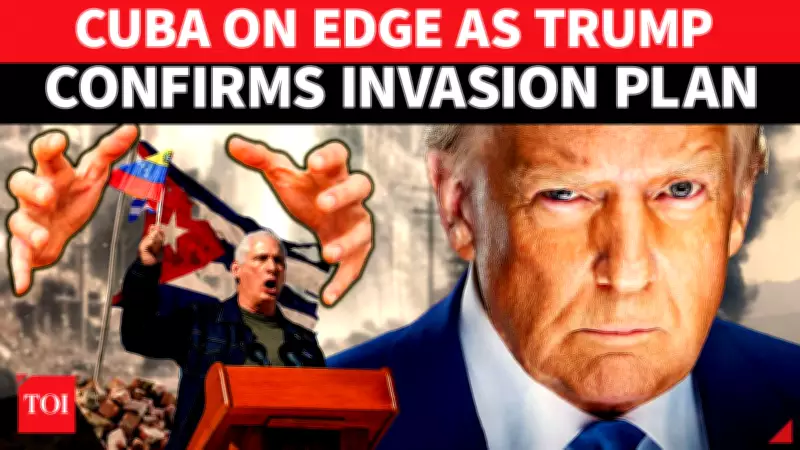
Trump Suggests Cuba Invasion as Island Plunges into Darkness Amid Oil Blockade
Former U.S. President Donald Trump has openly hinted at a possible military intervention in Cuba, describing such an action as "an honor" amid escalating tensions in the Middle East. This comes as Cuba grapples with crippling blackouts and a severe fuel shortage caused by an ongoing oil blockade, raising questions about Washington's intentions toward the island nation.
Fuel Crisis and Blackouts Spark Invasion Speculation
Cuba is currently experiencing widespread power outages and economic distress due to a blockade that has choked its fuel supplies. The situation has deteriorated to the point where daily life is severely disrupted, with reports of prolonged blackouts affecting homes, businesses, and critical infrastructure. In this context, Trump's comments have fueled speculation that the U.S. might be considering a regime change strategy, similar to past interventions in regions like Venezuela.
Trump stated, "Would be an honor," when asked about the potential for a U.S. takeover of Cuba, though he did not provide specific details on any planned military operations. This vague yet provocative remark has alarmed international observers, who see it as part of a broader pattern of aggressive foreign policy rhetoric from the former president.

Broader Geopolitical Context: Iran War and Global Tensions
The suggestion of a Cuba invasion emerges against the backdrop of heightened conflicts involving Iran and other global powers. Recent events include:
- Iranian attacks on Israel, with missiles reportedly striking near Jerusalem and targeting U.S. bases in the Gulf region.
- Drone breaches by Iraqi resistance groups at the U.S. Embassy in Baghdad, highlighting vulnerabilities in American diplomatic security.
- Hezbollah's rocket and drone assaults on Israeli towns, causing significant damage and casualties.
- Political fallout in the U.S., with senators criticizing Trump's war strategies and Pentagon planning amid the Iran conflict.
These incidents underscore a volatile international landscape where military actions and diplomatic strains are intensifying. Trump's focus on Cuba could be interpreted as a pressure tactic to divert attention or assert U.S. dominance in the Western Hemisphere while conflicts rage elsewhere.
Reactions and Implications for U.S. Foreign Policy
Trump's comments have sparked a mix of concern and debate among policymakers and analysts. Some view it as a mere rhetorical flourish aimed at rallying his political base, while others warn it could signal a shift toward more interventionist policies if he returns to power. The mention of Cuba, a long-standing adversary of the U.S., adds a historical dimension to the current tensions, reminiscent of Cold War-era confrontations.
Moreover, the oil blockade exacerbating Cuba's crisis raises ethical questions about the humanitarian impact of such measures. If the U.S. were to pursue an invasion, it could face significant logistical challenges and international backlash, especially given ongoing commitments in the Middle East.
In summary, Trump's hint at a Cuba invasion amid the Iran war and global conflicts highlights the unpredictable nature of current geopolitics. As blackouts cripple the island and fuel shortages persist, the world watches closely to see if this is a genuine threat or a strategic bluff in a high-stakes power play.