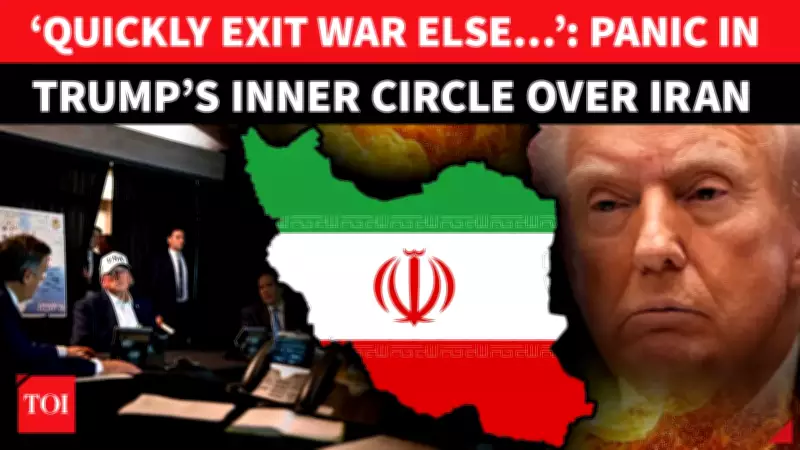
White House Advisers Intensify Pressure on Trump to Exit Iran Conflict
Pressure is mounting within the White House as key advisers are urgently pushing U.S. President Donald Trump to develop and implement a clear exit strategy from the escalating military conflict with Iran. Officials are expressing deep concerns that a prolonged war could lead to severe political backlash, skyrocketing fuel prices, and significant economic instability across the United States.
Economic and Political Risks Drive Calls for Withdrawal
Oil prices have already surged dramatically, surpassing the critical threshold of $100 per barrel, which is raising alarm among both American voters and policymakers. This sharp increase is directly linked to the ongoing tensions in the Persian Gulf, highlighting the immediate economic impact of the conflict. Advisers fear that continued military engagement could exacerbate these issues, potentially harming Trump's political standing and the broader U.S. economy.
Some senior officials within the administration are advocating for declaring the current military campaign a success and initiating a phased withdrawal of forces. They argue that this approach would mitigate risks and allow the U.S. to focus on domestic priorities. However, President Trump has maintained a firm stance, repeatedly warning of further military strikes if Iran threatens global oil flows through the strategically vital Strait of Hormuz.

Strategic Dilemma and Ongoing Tensions
As hostilities persist, Washington faces a critical and complex dilemma: how to effectively end the war before the human, financial, and political costs escalate to unsustainable levels. The situation remains volatile, with recent incidents, such as Trump's controversial remarks mocking Iranian sailors killed in a warship attack, adding to the diplomatic friction.
International reactions have been swift, with Iran's Islamic Revolutionary Guard Corps (IRGC) dismissing U.S. signals of retreat and asserting its own strategic autonomy. Meanwhile, reports of attacks, including strikes on American bases in the Gulf region like Al Udeid Air Base in Qatar, underscore the ongoing security challenges.
Key Developments in the Conflict:- Oil prices exceed $100 per barrel, fueling economic concerns.
- Advisers push for an exit strategy to avoid prolonged war.
- Trump warns of further strikes if Iran disrupts oil flows through the Strait of Hormuz.
- Iranian proxies claim attacks on U.S. bases in Kuwait and Bahrain.
- Regional impacts, including drone attacks in Dubai, highlight broader instability.
The broader geopolitical landscape is also affected, with incidents like a powerful Iranian missile reportedly targeting Israeli leaders' shelters and pro-Iran rallies in Tel Aviv adding layers of complexity. As the White House deliberates, the urgency to resolve the conflict grows, balancing military objectives with economic and political realities.