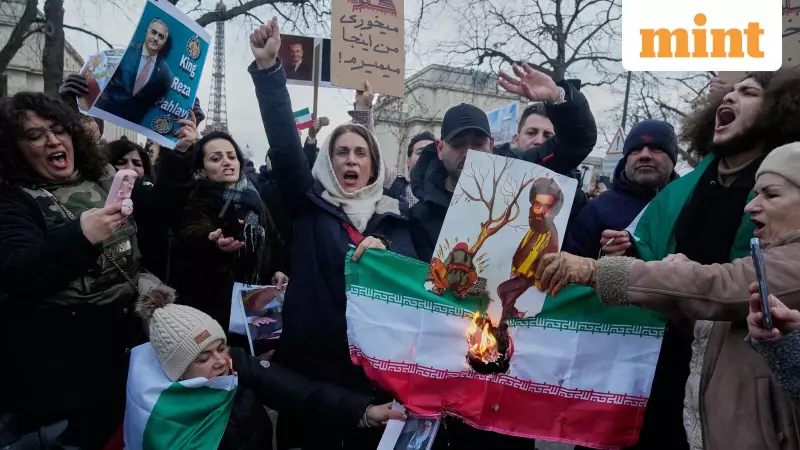
US President Donald Trump has once again signalled a tough stance against Iran, with reports indicating he is actively considering a range of potential military actions. This comes in the wake of deadly nationwide protests in Iran, where the death toll has reportedly surged to at least 544 people. In a contradictory move, Trump also claimed on Sunday that the Iranian leadership is now seeking negotiations with the United States.
Military Options on the Table
President Trump is scheduled to receive a critical briefing from senior administration officials on Tuesday. This meeting, as reported by the Wall Street Journal, will focus on specific options to respond to the ongoing unrest in Iran. The spectrum of potential responses under consideration is broad and significant.
The possible next steps include military strikes, deploying covert cyber weapons against Iranian military and civilian infrastructure, imposing additional sanctions on the Iranian government, and amplifying anti-government voices online. The White House has declined to comment on these specific reports.

"We’re looking at some very strong option, we’ll make a determination," Trump stated late on Sunday, warning Iran that the US is closely monitoring the violent crackdown on protesters. He suggested that a line had been crossed, citing the killing of people who "aren’t supposed to be killed."
Internal Concerns and External Warnings
Despite the tough talk, there are notable concerns within the US administration. Officials speaking to CNN fear that any military action could backfire spectacularly. The primary worry is that strikes could unite the Iranian populace behind their government, undermining the very protests the US aims to support, or provoke Iran into a direct military retaliation.
Adding a layer of caution, British media outlet The Telegraph reported that senior US defense officials have advised Trump that the military requires more preparation time for any potential strikes against Iran. This indicates that while options are being weighed, execution may not be immediate.
Claims of Negotiations and Soaring Death Toll
Amidst the threats of force, President Trump made a surprising claim aboard Air Force One. He stated that Iran's leadership had reached out to propose negotiations following his threats of action. Trump asserted, "Iran wants to negotiate," but added cryptically that "we may have to act before a meeting." These claims have not been independently verified by Iranian sources.
Contrasting sharply with the political manoeuvring, the human cost of the protests continues to rise. The US-based rights group HRANA reported on Sunday that the unrest has claimed at least 544 lives, with fears that the actual number could be even higher. The protests, which began on December 28 over economic grievances, have evolved into a broader challenge against Iran's clerical establishment.
Iranian authorities have blamed the United States and Israel for instigating the trouble. In a stern warning, Iranian Parliament Speaker Mohammad Baqer Qalibaf, a former Revolutionary Guards commander, stated that any attack on Iran would make Israeli territory and all US bases and ships "legitimate targets." The regime has called for nationwide rallies to condemn what it labels US and Israeli-led "terrorist actions."
In a related development, President Trump mentioned he would speak with billionaire Elon Musk about utilising SpaceX's Starlink satellite service to help restore internet access in Iran, which has been heavily restricted by the government during the protests.