Trump Casts Doubt on Iran's New Supreme Leader's Survival Amid Escalating Regional War
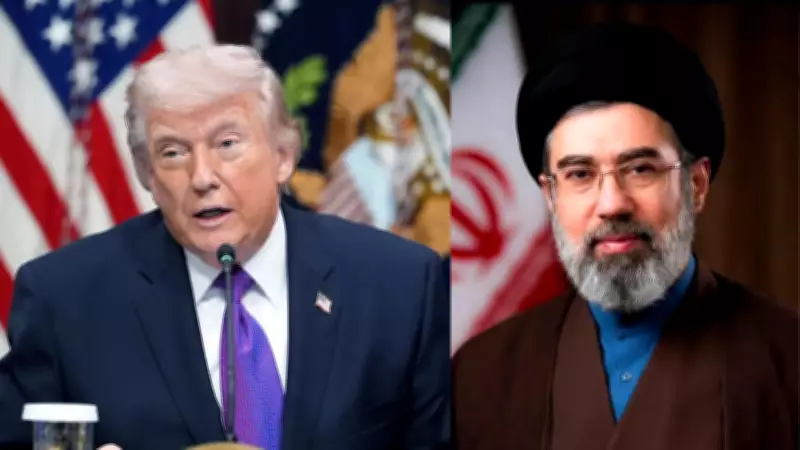
In a provocative statement that has ignited fresh international speculation, former US President Donald Trump has publicly questioned whether Iran's newly appointed supreme leader, Mojtaba Khamenei, is even alive. This startling comment comes as the intensifying military conflict between the United States, Israel, and Iran continues to expand across the volatile Middle East region, threatening global stability and energy security.
Uncertainty Over Khamenei's Condition Fuels Rumors
During a recent interview with NBC News, Trump expressed deep skepticism about the status of the 56-year-old Iranian cleric, who assumed power following the death of his father, longtime leader Ali Khamenei, in US-Israeli strikes on February 28. "I don't know if he's even alive. So far, nobody's been able to show him," Trump declared, noting that Khamenei's first communication after taking office was delivered in writing rather than through a public appearance.
The former president added that widespread rumors are circulating about Khamenei's fate, stating, "I'm hearing he's not alive, and if he is, he should do something very smart for his country, and that's surrender." Trump subsequently described reports of the leader's death as mere "rumor," but his comments have amplified existing concerns about the cleric's health and whereabouts.

Conflicting Reports and Official Denials
Since his appointment earlier this month, Mojtaba Khamenei has not made any public appearances, prompting intense speculation both within Iran and internationally. A report by The New York Times, citing anonymous Iranian officials, suggested that Khamenei may have sustained injuries during the initial attacks, including wounds to his legs. Iranian state television has referred to him as a "wounded veteran" of the ongoing war, though no specific details have been provided.
Iranian authorities have firmly rejected suggestions that the new supreme leader is incapacitated. Foreign Minister Abbas Araghchi asserted there is "no problem" with Khamenei's condition, directly countering claims by US Defence Secretary Pete Hegseth that the leader had been wounded and possibly disfigured. Earlier, Yousef Pezeshkian, the son of Iranian President Masoud Pezeshkian, attempted to calm speculation through a Telegram message, writing, "I heard news that Mr Mojtaba Khamenei had been injured. I have asked some friends who had connections. They told me that, thank God, he is safe and sound."
Regional Conflict Expands with Devastating Consequences
The uncertainty surrounding Iran's leadership emerges as the regional war continues to widen with devastating consequences. Iran has launched hundreds of missiles and drones toward Israel and US-aligned Gulf states, while Washington and Tel Aviv have conducted waves of retaliatory strikes on Iranian military and infrastructure targets. Missiles have been intercepted over countries including Bahrain and Jordan, and US bases across the region have come under persistent attack.
Israeli forces report striking more than 200 targets in Iran in recent days, including missile launchers and defense systems. The conflict has begun to severely disrupt international commerce and regional stability, prompting President Trump to urge nations such as China, Britain, France, Japan, and South Korea to deploy naval forces to help secure the Strait of Hormuz—a critical chokepoint for global oil supplies that handles approximately one-fifth of the world's petroleum exports.
Broader Implications for Global Security
The escalating violence and leadership uncertainty in Iran represent a significant threat to Middle Eastern stability and international security. The death of Ali Khamenei in February triggered a wider regional conflict that has since expanded across the Gulf and the Levant, with no immediate resolution in sight. The situation underscores the fragile nature of geopolitical alliances and the potential for miscalculation to lead to broader confrontation.

As diplomatic efforts struggle to gain traction, the military actions continue to intensify, raising concerns about prolonged instability and its impact on global energy markets, trade routes, and international relations. The coming weeks will be critical in determining whether the conflict can be contained or if it will spiral further, with potentially catastrophic consequences for the region and beyond.