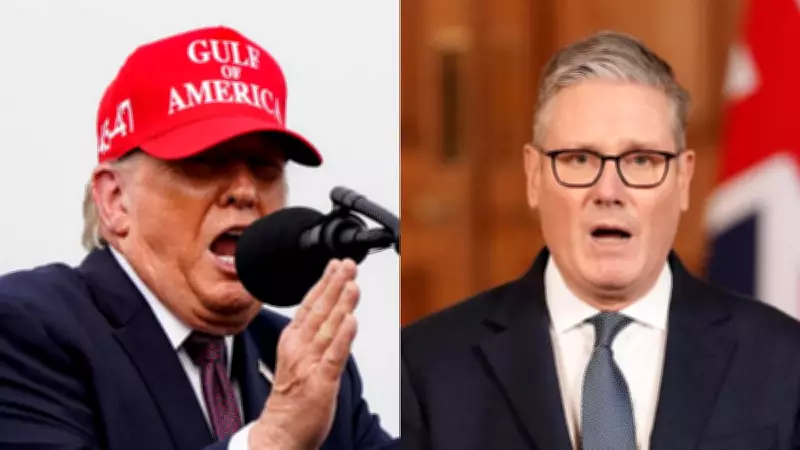
In a significant diplomatic development, former United States President Donald Trump has publicly expressed that he is "very disappointed" with United Kingdom Prime Minister Keir Starmer. This reaction stems from Starmer's initial decision to block the United States from utilizing British air bases to conduct military strikes.
Initial Denial and Subsequent Reversal
According to reports, the United Kingdom had formally denied the United States permission to launch air strikes from its strategically located air bases. This refusal created a notable strain in the traditionally strong US-UK alliance, raising questions about coordination on international security matters.
However, in a pivotal shift on Sunday evening, Prime Minister Starmer announced that he was accepting a specific request from the United States. The approval grants the US the ability to use British bases exclusively for what Starmer termed "defensive strikes" against targets linked to Iran.

Trump's Reaction and Broader Implications
Donald Trump, known for his outspoken views on foreign policy, did not hold back in his criticism. His expression of disappointment highlights the potential friction in US-UK relations under the new Labour government led by Starmer. This incident underscores the complexities of military cooperation between the two nations, especially concerning actions in the Middle East.
The term "defensive strikes" as specified by Starmer suggests a cautious approach, limiting US operations to retaliatory or protective measures rather than pre-emptive attacks. This nuanced stance may reflect broader geopolitical considerations and domestic political pressures within the United Kingdom.
Context and Future Outlook
This development occurs against a backdrop of ongoing tensions involving Iran and its proxies in the region. The ability to use UK air bases is crucial for the United States, providing logistical advantages for operations in the Middle East. Starmer's initial reluctance and subsequent conditional approval could signal a more restrained UK foreign policy stance compared to previous administrations.
As both nations navigate this situation, observers will be watching closely to see how it affects future collaborative efforts on security and defense. The episode serves as a reminder of the delicate balance in international alliances, where strategic interests must align with political and ethical considerations.