Former US President Donald Trump has publicly indicated that American forces carried out a military strike against a facility in Yemen. This action was reportedly in direct response to an attack on US Navy boats, which Trump linked to drug smuggling operations.
The Incident and Trump's Revelation
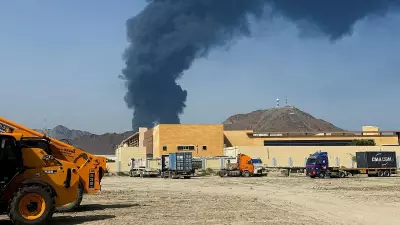
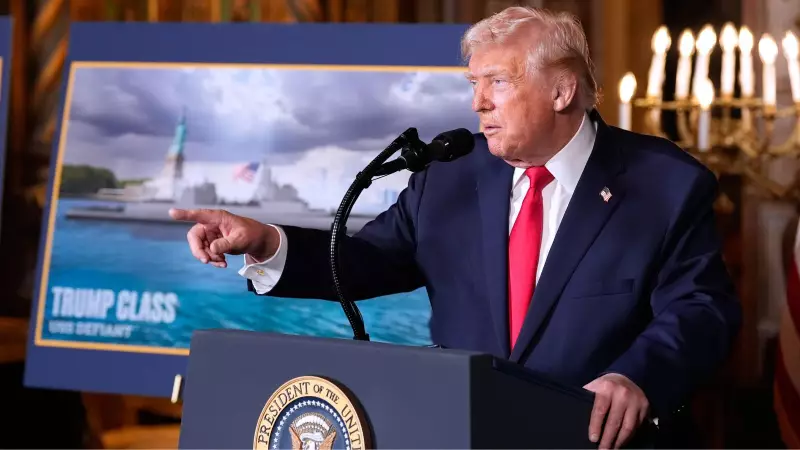
Speaking at a rally in Waterford Township, Michigan, on February 17, Donald Trump made a significant revelation about US military action. He stated that American forces targeted a site in Yemen connected to Iran. The context for this strike, according to Trump, was an earlier assault on US Navy vessels. He described this assault as involving "drug boats" that attempted to attack the American ships.
While Trump did not provide a specific date for the strike during his speech, his comments have brought a previously undisclosed or less-publicized operation into the spotlight. He framed the action as a necessary and strong response to a direct threat against US military assets, emphasizing a decisive approach to national security.

Details of the Provocation and Response
The provocation, as outlined by the former President, involved small boats, allegedly used for drug smuggling, launching an attack on US Navy ships. This type of asymmetric maritime threat is a known challenge in strategic waterways. In retaliation for this attack, Trump confirmed that the United States ordered a strike on a facility within Yemen.
Trump explicitly connected the targeted facility to Iran, stating, "We just hit Yemen. And we hit, I think, an appropriate location in Iran." This phrasing underscores the perceived Iranian role in supporting groups that threaten US interests in the region. The strike represents a clear escalation in responding to maritime threats by targeting infrastructure on land, linked to the backers of the attacking forces.
Regional Context and Implications
This incident and the subsequent strike occur within a complex and volatile regional landscape. Yemen has been embroiled in a civil war for years, with Houthi rebels controlling significant territory. The Houthis are widely seen as receiving support from Iran, a claim Tehran often downplays. The waters around Yemen, particularly the Red Sea and the Gulf of Aden, are critical global shipping lanes where such confrontations have increased.
The revelation by Donald Trump highlights the ongoing, often shadowy, confrontations between the US and Iran-aligned factions in the Middle East. It signals a continued willingness to use military force to protect naval assets and deter attacks. Such actions carry the risk of further escalating tensions in a region already fraught with conflict, potentially drawing direct responses from Iranian-backed groups against US or allied targets.
Furthermore, the mention of "drug boats" adds another layer, pointing to the intersection of narcotics trafficking and regional militancy as a dual threat to maritime security. The US military's response, targeting a land-based facility, sets a precedent for holding not just direct attackers but their supporting networks accountable.
In conclusion, Donald Trump's comments have shed light on a significant military action linking a drug boat attack on the US Navy to a retaliatory strike on an Iran-linked facility in Yemen. This event underscores the persistent volatility in Middle Eastern waters and the complex proxy dynamics involving the United States and Iran.