

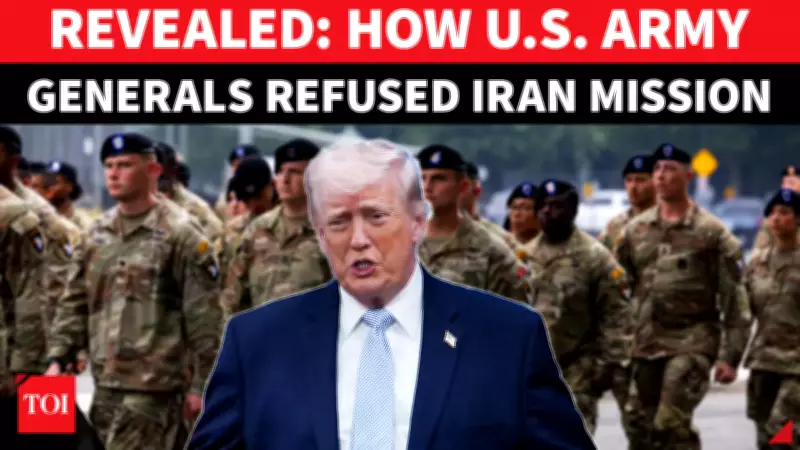
Trump Acknowledges Military Commanders' Opposition to Iran Rescue Mission
In a significant public admission, former U.S. President Donald Trump has revealed that not all military commanders supported the decision to proceed with a high-stakes rescue operation for a downed F-15 pilot in Iran. Speaking openly about the incident, Trump confirmed there were substantial differences within the command structure, stating explicitly that "not everyone was on board" with the plan to execute the mission.
Internal Divisions Within U.S. Military Command
The revelation highlights deep internal divisions at the highest levels of U.S. military leadership during a critical moment of international tension. Despite reported hesitation and opposition from key commanders, the operation ultimately moved forward, demonstrating the complex dynamics of decision-making in crisis situations. This admission provides unprecedented insight into the challenges faced when coordinating military actions under pressure.
The rescue mission proceeded despite commanders' reluctance, raising questions about the balance between presidential authority and military counsel. The operation's execution amid such disagreement underscores the tension between strategic planning and operational realities in hostile environments.

Context of U.S.-Iran Military Tensions
This revelation comes against a backdrop of escalating military confrontations between the United States and Iran, as indicated by related reports of multiple aircraft incidents in the region. The rescue operation for the F-15 pilot represents just one episode in a series of heightened tensions that have characterized U.S.-Iran relations in recent years.
The internal military disagreement over the rescue mission suggests that even during periods of apparent unity in external operations, there may be significant behind-the-scenes debates about strategy and risk assessment. This insight into command-level dissent provides a more nuanced understanding of how military decisions are made during international crises.
Implications for Military-Presidential Relations
Trump's acknowledgment of commanders' opposition to the Iran rescue operation sheds light on the relationship between civilian leadership and military expertise. The fact that the mission proceeded despite these objections demonstrates how presidential authority can override military counsel in certain circumstances, particularly in time-sensitive rescue scenarios.
This episode raises important questions about:
- The role of military commanders in advising on high-risk operations
- The balance between presidential decision-making and military expertise
- How internal disagreements are managed during international crises
- The transparency of command-level discussions in military operations
The successful execution of the rescue mission despite initial opposition suggests that sometimes controversial decisions can yield positive outcomes, though they may come at the cost of internal consensus within the command structure.






