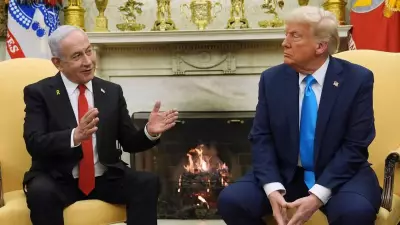
In a significant shift in foreign policy, United States President Donald Trump announced on Friday that he has called off a previously anticipated second wave of military attacks against Venezuela. The decision, attributed to receiving cooperation from the South American nation, was revealed just as the President prepares to host a crucial meeting with top executives from the global oil industry at the White House.
A Sudden De-escalation in Venezuela Policy
The announcement, made on January 9, 2026, marks a notable pivot from a stance of potential military confrontation. President Trump stated that the planned escalation of attacks was no longer necessary due to cooperation from Venezuela. While the exact nature and extent of this cooperation were not detailed in the initial statement, the move suggests a potential diplomatic opening or a strategic recalculation by the US administration.
This development follows an initial period of heightened tensions, where a first wave of actions had already been undertaken. The cancellation of further military measures will be closely watched by global markets and geopolitical analysts, particularly given the region's volatility and Venezuela's vast oil reserves.

White House to Host Major Big Oil Summit
Parallel to this foreign policy shift, President Trump's schedule for the same day includes a high-profile gathering at 1600 Pennsylvania Avenue. The President is set to convene a meeting with leaders of the world's largest oil and gas companies, colloquially referred to as "Big Oil."
The timing of this dual-track agenda—de-escalation with a major oil-producing nation and a summit with energy titans—is striking. It raises immediate questions about the interconnection between US energy security, global oil markets, and geopolitical strategy. Key discussion points at the White House meeting are likely to include:
- Global energy supply stability and market prices.
- Investment and regulatory frameworks for the hydrocarbon sector.
- The potential impact of changing dynamics in regions like South America on global oil flow.
Global Implications and Market Reactions
The twin announcements are poised to have wide-ranging consequences. For Venezuela, the cancellation of attacks could provide a temporary respite, though the long-term political and economic challenges remain deeply entrenched. The international community, including nations in Latin America and key US allies, will be assessing the sincerity and durability of this de-escalation.
For the energy sector, the White House meeting signals the administration's continued focus on traditional energy dominance. The outcome of the talks could influence corporate strategy, upstream investments, and even the trajectory of energy transition debates. Markets may react to the reduced risk of a conflict that could have disrupted crude supplies from Venezuela, albeit a nation already under severe production constraints due to internal crises.
As the situation develops, the world will be looking for more clarity on what specific cooperation from Venezuela prompted President Trump's decision and how the dialogue with Big Oil executives shapes America's energy and foreign policy in the coming days.