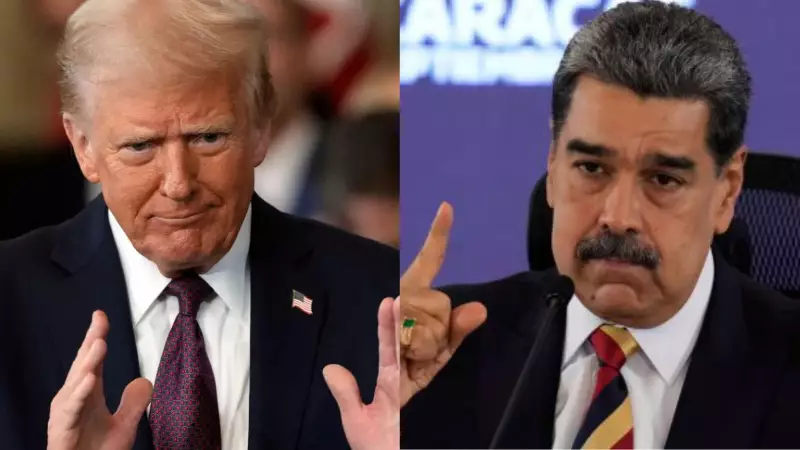
In a significant shift in policy, US President Donald Trump announced on Friday, January 9, 2026, that he has called off a planned second wave of military action against Venezuela. This decision is directly linked to Caracas's move to release a number of individuals long held as political prisoners and its newfound cooperation with Washington.
From Military Action to Economic Opportunity
President Trump revealed his decision in a post on his Truth Social platform. He stated that Venezuela was "releasing large numbers of political prisoners as a sign of seeking peace," which prompted the US to halt further military operations for the time being. However, he clarified that American naval vessels would remain stationed in the region for security purposes.
In a major economic announcement tied to the de-escalation, Trump declared that US energy corporations are prepared to invest a staggering at least USD 100 billion in Venezuela's oil sector. He added that he would be meeting with top executives from these major oil firms at the White House later that same day.

Prisoner Releases and a Notorious Prison's Closure
These developments follow the dramatic capture of Venezuelan President Nicolás Maduro by US forces in Caracas days earlier. Maduro was transferred to New York to face serious drug trafficking charges, an event that triggered immediate political upheaval in the South American nation.
Venezuelan authorities, through Jorge Rodríguez, the head of the National Assembly, confirmed on state television that the interim administration would free "a significant number" of prisoners immediately. While no specific names or numbers were initially provided, the Spanish foreign ministry later confirmed that five of its nationals had been released, offering the first official proof the process had begun.
The first confirmed release was that of Rocío San Miguel, a Venezuelan-Spanish defence analyst and human rights activist. Arrested in 2024 on charges of treason and conspiracy in an alleged plot to assassinate the president, her detention had drawn international concern. Her family confirmed she was transferred to the Spanish embassy in Caracas upon release.
Concurrently, President Trump stated he had ordered the closure of El Helicoide, a notorious detention centre in Caracas housing dozens of political detainees. Rights groups have documented extensive allegations of torture and abuse at the facility over many years. However, Venezuelan rights organisation Provea cautioned that closing one prison does not solve systemic issues, urging the release of all political prisoners.
Political Maneuvering and Future Demands
In a notable political shift, Trump indicated in an interview on Fox News's 'Hannity' program that Venezuelan opposition leader Maria Corina Machado would be visiting Washington the following week. This is a reversal from his previous dismissal of working with her, where he claimed she lacked support within Venezuela.
Machado, who has several allies imprisoned, has consistently demanded broader releases. The Venezuelan government has historically denied holding political prisoners, maintaining that all detainees are facing legitimate criminal charges—a claim vehemently disputed by opposition figures and global human rights organisations.
The path forward now appears contingent on Caracas continuing the prisoner releases and maintaining dialogue. Trump's decision to suspend further military strikes is explicitly tied to these conditions. With the promise of massive American oil investment on the table, the coming weeks will be critical in determining whether this fragile new chapter in US-Venezuela relations holds.