Trump Unleashes Scathing Critique on Obama and Democrats Amid Middle East Escalation
Former US President Donald Trump has launched a blistering verbal offensive against his predecessor Barack Obama and senior Democratic Party figures, as tensions across the Middle East intensify dramatically. In a series of posts on his Truth Social platform, Trump accused his political critics of "complaining bitterly" about recent US and Israeli military strikes against Iran, suggesting their opposition stems purely from partisan animosity rather than principle.
"Whatever I Do, They Will Be on the Opposite Side"
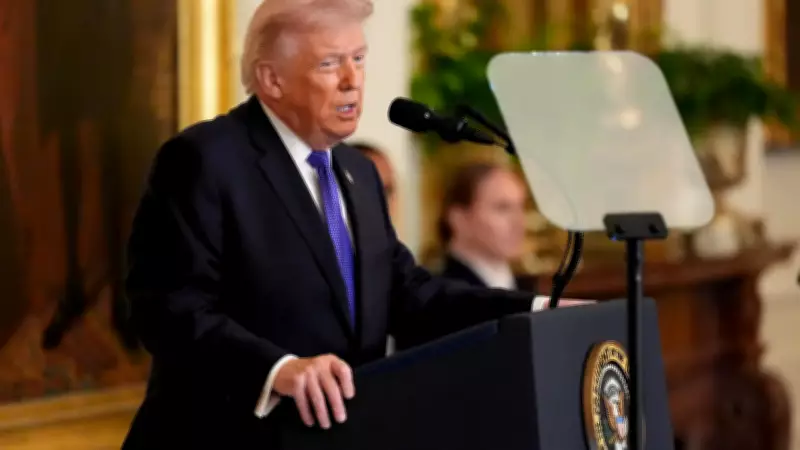
"The Radical Left Democrats, a Party that has completely lost its way, are complaining bitterly about the very necessary and important attack, by the United States and Israel, on Iran," Trump wrote in one particularly pointed message. He further characterized his political rivals as "sick" and "demented," while simultaneously asserting that the United States remains "bigger, better and stronger than ever before."
Trump's central argument posits that Democratic opposition to the joint US-Israeli operation against Iranian targets is motivated by political spite rather than substantive policy disagreement. "Whatever I do, they will be on the opposite side," he declared, framing the conflict as another chapter in America's polarized political landscape.

Renewed Criticism of Iran Nuclear Deal
Approximately one hour before his broader attack on Democrats, Trump renewed his longstanding criticism of the 2015 Iran nuclear agreement, formally known as the Joint Comprehensive Plan of Action (JCPOA). The former president argued that had he not withdrawn from the accord during his first term, Iran would already possess nuclear weapons capability.
"If I didn’t terminate Obama’s horrendous Iran Nuclear Deal (JCPOA), Iran would have had a Nuclear Weapon three years ago," Trump asserted. He directly blamed both former President Barack Obama and current President Joe Biden for what he described as a "dangerous transaction" that threatened global security.
Trump elaborated further, stating: "That was the most dangerous transaction we have ever entered into, and had it been allowed to stand, the World would be an entirely different place right now." This commentary represents the latest chapter in Trump's years-long campaign against the nuclear agreement he abandoned in 2018.
Regional Conflict Widens Across Multiple Fronts
The former president's remarks arrive as military confrontations expand across the Middle East region. Recent developments include:
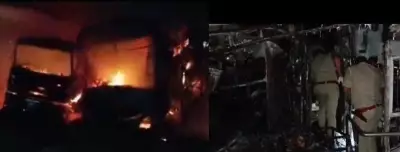
- Iran launching drone and missile attacks against Israeli targets, US military bases, and Gulf nation facilities
- Israeli forces conducting strikes against Hezbollah-linked sites in Lebanon
- Reports of explosions occurring in Bahrain, Dubai, and Doha
- Gulf nations publicly vowing to strengthen their defensive capabilities
The escalating violence has triggered significant reactions in global energy markets, with oil and gas prices surging amid growing threats to commercial shipping through the strategically vital Strait of Hormuz. This crucial waterway handles approximately one-fifth of the world's petroleum consumption, making any disruption potentially catastrophic for global energy supplies.
Questions Mount About US Military Commitment
Domestically, Trump faces increasing scrutiny regarding the potential scope and duration of American military involvement in the expanding conflict. In an interview with the New York Post, the former president declined to rule out deploying ground troops if circumstances warrant such action.
"I don’t say there will be no boots on the ground," Trump stated, while adding that such deployment would "probably" not become necessary but remains a viable option if required. This ambiguous positioning reflects the complex calculations surrounding US military engagement in the volatile region.

Defense Secretary Pete Hegseth has similarly avoided establishing clear limitations on potential US responses, emphasizing that the administration would not publicly telegraph specific military plans. Meanwhile, Secretary of State Marco Rubio has defended the strikes against Iran as pre-emptive measures, arguing that Iranian actions following Israeli operations created an imminent threat requiring immediate response.
Political Divisions Emerge Within Republican Ranks
While numerous Republican lawmakers have expressed support for Trump's approach, some voices within his traditional "America First" political base have begun expressing reservations. These critics warn that an extended military campaign risks drawing the United States into another protracted, open-ended conflict in the Middle East—precisely the type of foreign entanglement that many Trump supporters have historically opposed.
The emerging debate highlights the complex political dynamics surrounding US foreign policy in the Middle East, particularly as the 2024 presidential election approaches. Trump's aggressive rhetoric against Democratic opponents appears designed to solidify his political base while drawing clear distinctions between his approach and those of his predecessors.
As military actions continue across multiple Middle Eastern nations, and global energy markets react to the instability, the political fallout from Trump's comments and the broader conflict will likely influence both domestic American politics and international diplomacy for months to come.