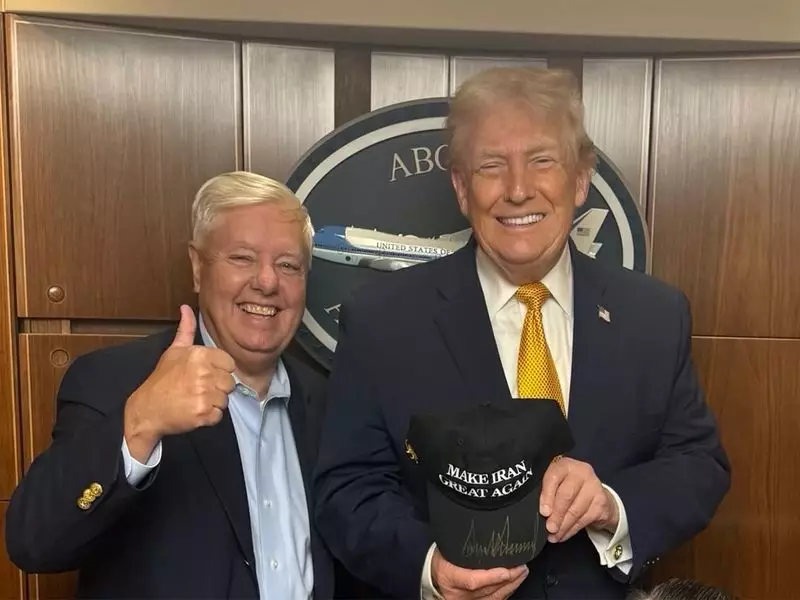
In a significant move with wide-ranging geopolitical implications, former US President Donald Trump has reportedly given his approval to a new legislative effort aimed at imposing stricter sanctions on Russia. The development, confirmed by prominent Republican Senator Lindsey Graham, is framed not just as a measure against Moscow but as a strategic tool to gain leverage in America's complex relationships with other major powers, notably China and India.
Graham Details the Strategic Rationale Behind the Bill
Senator Lindsey Graham, a key figure in the US Senate, provided crucial details about the proposed legislation and its broader intent. He stated that the former president has "greenlighted" the Russia sanctions bill, signaling strong Republican support for the measure. The core objective, according to Graham, extends beyond penalizing Russia for its actions in Ukraine.
He explicitly outlined that the bill is designed to arm the United States with significant diplomatic and economic leverage. "This will give us leverage against China and India," Graham asserted, highlighting how the legislation could be used to influence the foreign policy choices of these two Asian giants. The statement underscores a calculated approach where pressure on Russia is interlinked with managing ties with other nations perceived as not fully aligning with Western sanctions regimes.

Implications for India and the Global Order
The senator's direct mention of India points to ongoing US concerns regarding New Delhi's foreign policy stance, particularly its continued economic and diplomatic engagement with Russia. India has maintained a nuanced position on the Ukraine conflict, calling for dialogue while increasing imports of Russian oil. This bill, as framed by its proponents, could potentially be used to pressure India to recalibrate its ties with Moscow.
Similarly, the reference to China indicates an intent to use the sanctions regime to counter Beijing's strategic and economic support to Russia. The legislation appears to be a multi-pronged instrument in Washington's foreign policy toolkit, aiming to isolate Russia while simultaneously creating points of pressure on its major partners.
The backing from Donald Trump is a critical factor, given his influence within the Republican Party and his status as the presumptive presidential nominee. His support increases the likelihood of the bill advancing through Congress, potentially becoming law. This move signals a hardening bipartisan consensus in Washington on taking a tougher stand not only on Russia but also on using economic statecraft to shape the behavior of other nations in the geopolitical arena.
For India, this development presents a fresh diplomatic challenge. It will need to navigate the evolving sanctions landscape carefully to protect its energy security and strategic autonomy while managing its vital partnership with the United States. The coming months will reveal how this proposed leverage translates into concrete diplomatic dialogue and potential policy adjustments in capitals from New Delhi to Beijing.