Trump Unleashes Fury on Supreme Court Following Tariff Ruling
In a remarkable and unprecedented assault on a 236-year-old institution, President Donald Trump has accused the US Supreme Court of being influenced by foreign interests after it invalidated his "liberation day" tariffs in a 6-3 opinion. This historic institution predates the arrival of his ancestors in America by nearly a century, making the attack particularly striking.
Scathing Criticism and Allegations
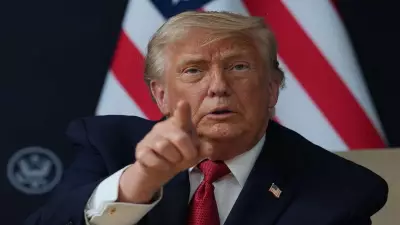
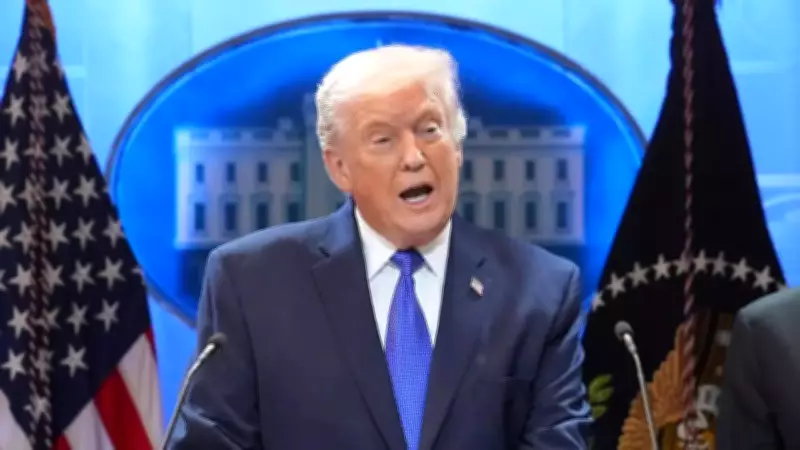
During a White House news conference and in subsequent social media posts, Trump launched a barrage of invective against the apex court. He labeled the majority justices as "lapdogs for the radical left" and "fools", accusing them of being "unpatriotic and disloyal to our Constitution." Trump further alleged that the court had been swayed by external global forces, while also targeting the plaintiffs in the case.
Focus on Indian-American Attorneys and Businesses
Among the plaintiffs was Chicago-based toy seller Learning Resources, which imports educational toys, STEM kits, and classroom supplies from India. Trump raged, "I know the people that brought the lawsuit… they’re major sleazebags... they're un-American slime balls who want to see our country fail." His comments appeared to reference Neal Katyal, an Indian-American attorney who argued the case before the Supreme Court on behalf of Learning Resources and other plaintiffs. Katyal has been a persistent critic of Trump's MAGA agenda.

The case also involved another Indian-American attorney, Pratik Shah, who served as lead counsel for Learning Resources and hand2mind. These educational toy companies challenged the presidential authority under the International Emergency Economic Powers Act (IEEPA). The Supreme Court consolidated all related cases, and Katyal, originally representing the Liberty Justice Center, won the right to present arguments after a coin toss.
Impact on Small Business
Learning Resources, a small family-owned business, imports DIY science kits, Montessori-style wooden toys, sensory tools, and yoga balls like BubblePlush from Indian companies such as Funskool and Lighthouse Learning. Company executives revealed they took legal action after being forced to pay $14 million in tariff payments in 2025, nearly pushing them to bankruptcy.
Legal and Political Repercussions
Following the judicial victory, both Learning Resources and Katyal emphasized that the case centered on presidential powers to impose tariffs, not on any individual president. Katyal stated, "It has always been about separation of powers, and not the politics of the moment. I'm gratified to see our Supreme Court, which has been the bedrock of our government for 250 years, protect our most fundamental values."
However, Trump remained unsparing in his attacks, even targeting the three conservative justices—Neil Gorsuch, Amy Coney Barrett, and Chief Justice John Roberts—who joined the three liberals in the 6-3 opinion. He remarked, "I think it’s an embarrassment to their families, if you want to know the truth—the two of them," referring specifically to Gorsuch and Barrett, both of whom he nominated to the court during his first term. Roberts was appointed by George W. Bush.
Immediate Fallout and Institutional Implications
The Supreme Court ruling represents a significant legal and political setback for Trump, who had imposed sweeping tariffs under IEEPA, citing national security and economic sovereignty. The court held that the president exceeded statutory authority, reinforcing Congress's primacy over trade and taxation powers under the Constitution. The alignment between liberal and conservative justices highlighted the institutional nature of the decision, focusing on statutory interpretation and constitutional structure rather than partisan ideology.
Legal scholars across the ideological spectrum noted that the ruling reaffirms the constitutional separation of powers amid expanding executive action. While it remains uncertain if this decision will curb future unilateral efforts to reshape US trade policy, it has injected tension into the relationship between the White House and the nation's highest court, which Trump believed he could influence.

Trump's reaction was immediate and intense. During a meeting with US governors, he reportedly went ballistic upon learning of the ruling, exclaiming about "the f***ing courts" and ending the meeting abruptly to formulate a response. Appearing in the White House briefing room hours later, still visibly furious, he was asked if the six justices would be welcome at the State of the Union address. Trump responded, "They’re barely invited. Honestly, I couldn’t care less if they come."