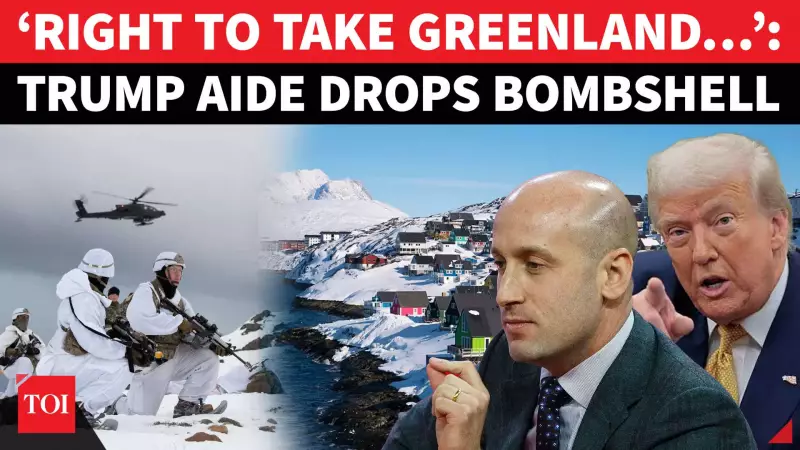
Global diplomatic tensions have flared dramatically after a key aide to former US President Donald Trump suggested that the United States could simply seize Greenland if it wanted to. The incendiary comments, made by senior advisor Stephen Miller, have triggered a fierce backlash from European allies and raised profound questions about the future of NATO and international law.
The Provocative Statement That Shook Alliances
In blunt remarks that have reignited global alarm, Stephen Miller argued that raw power, rather than established international law, is what truly shapes the global order. He dismissed concerns over national sovereignty and the unity of the NATO alliance, framing the potential acquisition of Greenland as a matter of American will. The comments, reported on January 7, 2026, directly challenge the foundational principles of territorial integrity that have underpinned post-World War II diplomacy.
This is not the first time Greenland has appeared on the Trump administration's radar. The remarks come as Donald Trump himself renews his interest in the vast, icy territory, long coveted for its strategic Arctic position and vast untapped mineral wealth. The renewed focus has fuelled fears among allies of a new era of American imperial assertiveness, where traditional alliances are secondary to unilateral ambition.

European Backlash and NATO Principles at Stake
The reaction from Europe was swift and severe. Denmark, which holds sovereignty over Greenland, pushed back strongly against Miller's suggestion. Several other European allies joined in, issuing stark warnings that any move against Greenland's status would shatter the core principles of the NATO alliance. They view the statement as a dangerous precedent that threatens the sovereignty of smaller nations and undermines the rules-based international system.
The core of their argument is that an alliance built on mutual defence and shared democratic values cannot tolerate one member threatening the territorial integrity of another. This incident has exposed a deep fissure within NATO, highlighting how Trump's "America First" doctrine continues to create friction with traditional partners, even after his presidency.
Strategic Implications and a New Cold Front
The controversy extends far beyond a war of words. Control of Greenland offers immense strategic advantages in the rapidly changing Arctic, a region becoming increasingly accessible due to climate change and a new arena for geopolitical competition with Russia and China. Key strategic interests include:
- Military Positioning: Dominant control over crucial Arctic shipping routes and early warning defence systems.
- Resource Access: Tapping into rare earth minerals and potential oil and gas reserves critical for modern technology and energy.
- Geopolitical Influence: Establishing a dominant foothold in a region contested by global powers.
Miller's comments suggest a belief that these strategic prizes justify overriding diplomatic norms. This realpolitik approach has alarmed observers who see it as a return to 19th-century power politics, potentially destabilising a world order that has, despite its flaws, prevented large-scale conflicts between major powers for decades.
The fallout from this episode is likely to be significant. It has already provided ammunition to critics who accuse the Trump camp of reckless foreign policy. Furthermore, it forces European nations to reconsider their dependency on US security guarantees, potentially accelerating moves toward greater European strategic autonomy. As the Arctic heats up, so too does the diplomatic cold war over who controls it.