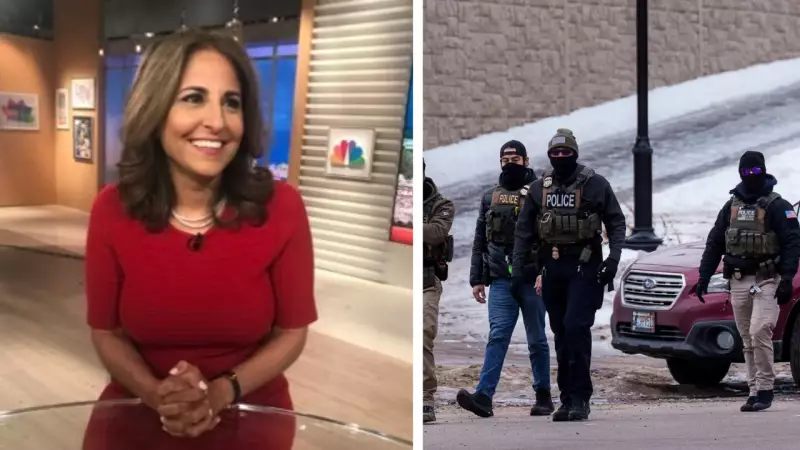
Indian-origin political consultant and Democratic think tank leader Neera Tanden has spoken out strongly against recent reports of racial profiling by US Immigration and Customs Enforcement authorities in Minnesota. Tanden expressed frustration that Asian Americans continue to face discrimination and are not viewed as truly American, even when they are born in the United States.
Tanden's Powerful Statement on Social Media
Neera Tanden, who serves as president and CEO of the Center for American Progress and previously worked as a senior government official, took to social media platform X to share her thoughts. She posted a clear message addressing the Asian American community directly. "My Asian brothers and sisters, they do not see us as American even when we are born here," Tanden wrote in her post that quickly gained attention.
Congressional Hearing Reveals Disturbing Practices
Tanden's comments came following a Democratic-led congressional field hearing on immigration matters held in Minnesota on Friday. The hearing was organized by Congresswoman Ilhan Omar, who represents Minnesota's 5th congressional district. During this important gathering, St. Paul Mayor Kaohly Her provided troubling testimony about ICE operations in her city.

Mayor Her told lawmakers that residents have reported federal officers using racial profiling tactics while conducting arrests. She described specific incidents where ICE agents have been going door-to-door in residential neighborhoods, knocking on random houses and asking residents where Asian people live. This practice has created widespread fear and anxiety within immigrant communities.
Personal Experience of Discrimination
Mayor Her shared her own personal precautions, revealing that she has been advised to carry her passport at all times because she fears being targeted based on her appearance. Her background adds depth to her testimony - she was born in Laos, where she and her family lived in a refugee camp due to the Vietnam War. Kaohly Her made history by becoming the first woman, first Asian American, and first Hmong American to serve as mayor of St. Paul.
The mayor described her city as being under extreme stress due to the ICE presence, noting that fear has spread across immigrant communities, particularly affecting marginalized racial groups. She emphasized that these operations are having real consequences beyond just individual encounters with law enforcement.
Economic and Educational Impact
The situation has created significant economic disruption in St. Paul. According to Mayor Her, local business owners have reported sales dropping by as much as sixty percent as residents choose to stay home rather than risk encounters with immigration authorities. The fear has extended to educational institutions as well, with parents and students expressing such concern that St. Paul Public Schools decided to offer e-learning options and online classes for the next month.
Recent Incident Highlights Problem
Adding to the concerns, a recent incident captured on video showed a man being detained by federal agents apparently because of his accent. The video sparked condemnation from community members who criticized ICE for questioning a man simply because he didn't "sound White." This incident has become a focal point in discussions about racial profiling and discrimination in immigration enforcement.
The congressional hearing also addressed the broader context of ICE operations in Minnesota, including discussion of the fatal shooting of a woman named Renee Good earlier in the week. An ICE agent named Jonathan Ross shot Good multiple times, claiming self-defense, though details surrounding the incident remain under investigation.
Neera Tanden's comments reflect growing concern among Asian American communities about their treatment and acceptance in American society. Her statement underscores the persistent challenges faced by minority groups, even those who are native-born citizens, in being fully recognized as American. The situation in Minnesota continues to develop as community leaders, politicians, and activists call for greater accountability and changes in immigration enforcement practices.