Prominent Economist Forced Out After Epstein Email Revelations
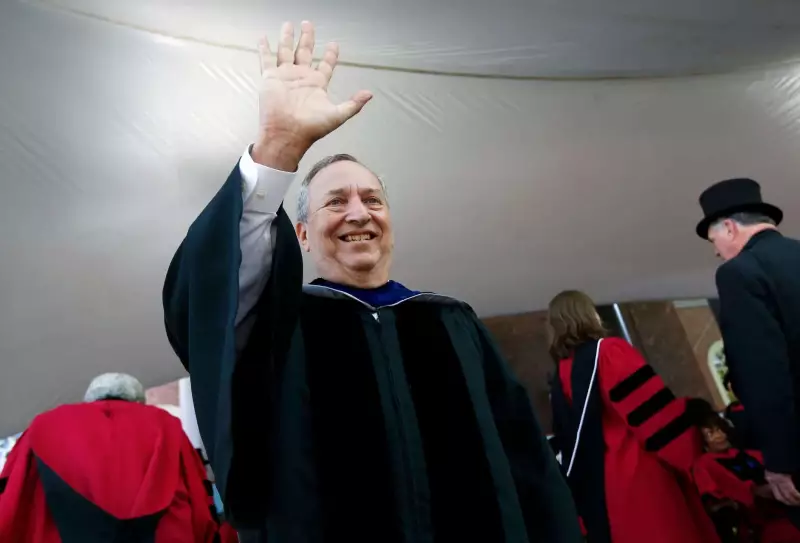
Larry Summers, one of America's most influential economic thinkers and a key figure in Democratic policymaking, has abruptly resigned from the OpenAI board this week. The sudden departure comes after newly disclosed documents revealed extensive email correspondence between Summers and the disgraced financier Jeffrey Epstein, raising uncomfortable questions about the depth of their relationship.
Summers, who served as US Treasury Secretary and Harvard University president, had been a fixture in American public life for decades. His resignation marks a dramatic fall from grace for someone who occupied rarefied air in both political and academic circles.
The Damning Email Evidence
The controversy erupted when a House panel investigating Epstein's network released previously unseen email exchanges. These documents show Summers corresponding with Epstein over several years, with the quantity and familiarity of their communication suggesting a relationship far deeper than previously acknowledged.

One of the most striking revelations involves an email where Summers appears to seek Epstein's personal advice about a relationship with a woman. This detail has raised particular concerns because it indicates Summers relied on Epstein for personal counsel, not just professional guidance.
The emails do not allege any criminal conduct by Summers, but the personal nature of some exchanges has triggered widespread alarm across political lines.
Bipartisan Backlash and Institutional Response
Both Democrats and Republicans reacted swiftly to the email disclosures, creating unprecedented political pressure. Lawmakers from both parties urged universities, businesses, and public institutions to sever connections with Summers immediately.
In Washington, such bipartisan consensus often signals that a problem has become politically untenable. For OpenAI, which already faces intense public scrutiny over its governance and artificial intelligence developments, the reputational calculation became clear-cut.
The pressure proved too much for Summers to withstand, leading to his decision to step down from all public commitments, including his influential position at one of the world's most important AI companies.
The Wider Epstein Fallout Continues
Summers' resignation represents the latest in a series of public reckonings prompted by long-delayed disclosures from Epstein's records. Years after Epstein's death, his network continues to ensnare powerful figures, demonstrating that associative reputational damage remains a potent force.
For Summers, who has spent decades as a public commentator and policy adviser to presidents, the cost extends beyond symbolic damage. This episode marks the most serious challenge to his public standing since his contentious exit from Harvard nearly two decades ago.
The fallout highlights how Epstein-related disclosures continue to reshape careers and influence patterns years later, proving that even tangential connections to the financier can trigger seismic consequences in American establishment circles.
As more documents emerge from various investigations, the reputational risk for anyone tied to Epstein's network continues to grow, suggesting that Summers likely won't be the last prominent figure facing such scrutiny.