South Asian American Advocates Rally at Supreme Court Over Critical Citizenship Case
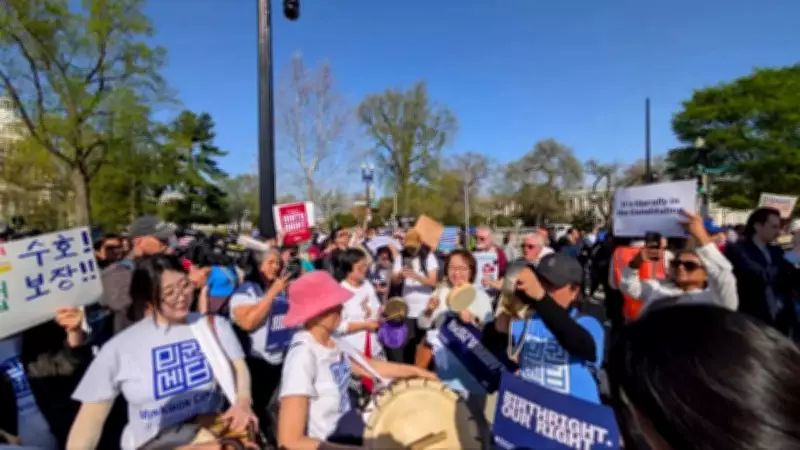
The South Asian American Justice Collaborative (SAAJCO) mobilized alongside hundreds of community members and immigrant rights advocates outside the United States Supreme Court building on Tuesday. The demonstration coincided with oral arguments in a landmark case that could potentially redefine birthright citizenship protections enshrined in the 14th Amendment of the US Constitution.
Representatives from SAAJCO described the proceedings as "fundamental" to the future of immigrant communities across America, with particular significance for South Asians, who represent one of the fastest-growing immigrant demographics in the country. The case centers on legal challenges to an executive order that seeks to reinterpret the scope and application of the 14th Amendment's citizenship clause.
"Powerful Energy" and Collective Mobilization
"The energy today was powerful... this is about recognizing that when one community is impacted, we all are," stated Chirag Shah, programme manager at SAAJCO, emphasizing the collective nature of the advocacy effort. Legal experts following the case warn that any judicial shift in interpreting the 14th Amendment could dismantle long-standing constitutional protections that have defined American citizenship for generations.

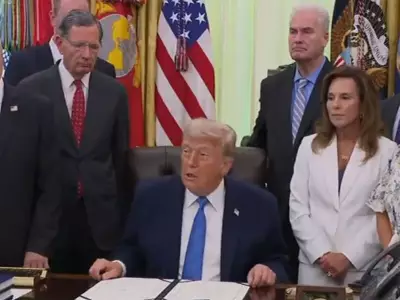
The executive order in question, signed during the previous administration, argues that the 14th Amendment has never been interpreted to grant citizenship universally to all individuals born on US soil. Specifically, it contends that birthright citizenship has always excluded persons born in the United States who were not 'subject to the jurisdiction thereof.' In practical terms, the order targets scenarios where a child is born to parents whose presence in the US is lawful but temporary, such as those on student visas, work visas, or tourist visas, particularly when neither parent is a US citizen or lawful permanent resident at the time of birth.
Historical Parallels and Retroactive Concerns
SAAJCO, which submitted an amicus brief in the case, highlighted troubling historical parallels and warned against narrowing constitutional guarantees. "Two things stood out," explained Kalpana V. Peddibhotla, Executive Director of SAAJCO. "Justice Sotomayor rightly raised the denaturalization of South Asians after the Thind ruling and whether changes to birthright citizenship could be applied retroactively. Reading new conditions into the 14th Amendment is already deeply concerning."
Peddibhotla further noted that while government lawyers offered assurances about limiting the scope of any reinterpretation, those limitations might not endure over time. "This administration has not thought through how far-reaching the implications are," she asserted. The government's reliance on the concept of 'temporary visitors' to argue that birthright citizenship should depend on domicile directly implicates families who have resided in the US for years or even decades on H-1B visas, in asylum status, or other immigration categories due to extensive green card backlogs.
Risk of Statelessness and Administrative Fallout
Legal experts and advocacy organizations have raised significant alarms about both the administrative burden and humanitarian consequences if the executive order is upheld by the Supreme Court. According to SAAJCO legal director Anisa Rahim, the court itself acknowledged potential administrative challenges during the arguments.
"For South Asians... that means many babies would be denied citizenship at birth," Rahim warned, highlighting the risk that some children could be left stateless. She pointed out that several South Asian countries do not automatically grant citizenship to children born abroad, which could exacerbate the risk of statelessness for affected families caught between conflicting nationality laws.

Broader Implications for Identity and Belonging
Advocates argue that this case transcends mere legal technicalities, touching on fundamental questions of identity, belonging, and the rights of immigrant communities within American society. SAAJCO's amicus brief specifically challenges the persistent notion of South Asians as "forever foreign" and underscores their long-standing historical presence and contributions to the United States.
With a decision from the Supreme Court expected in the coming months, the outcome possesses the potential to reshape American immigration law and citizenship rights for generations. The ripple effects would be felt across numerous communities, including the substantial Indian diaspora that is closely monitoring developments.
For now, organizations like SAAJCO have committed to continuing their mobilization of public support and sustained legal advocacy as this pivotal case progresses through the judicial system. The coming months will determine whether constitutional protections for birthright citizenship remain intact or face unprecedented reinterpretation.