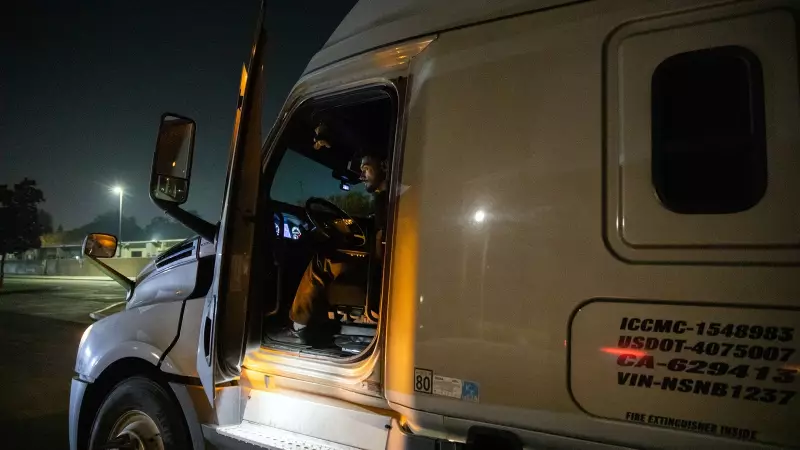
For the thousands of Sikh men from Punjab who navigate the vast highways of North America as long-haul truck drivers, the open road has long symbolized freedom and opportunity. Today, that same road feels lined with suspicion and unease. A recent diplomatic crisis, sparked by allegations of transnational assassination plots, has cast a long shadow over their livelihoods, transforming routine journeys into potential encounters with fear and prejudice.
The Diplomatic Storm That Reached the Highway
The source of this new anxiety stems from two major international incidents involving allegations against the Indian government. In June 2023, Canadian Prime Minister Justin Trudeau made a stunning assertion in Parliament, linking Indian agents to the killing of Sikh separatist leader Hardeep Singh Nijjar in British Columbia. Nijjar, designated a terrorist by India, was shot outside a gurdwara in Surrey.
Months later, in November 2023, the United States unveiled allegations of a foiled plot to assassinate another Sikh separatist, Gurpatwant Singh Pannun, a dual citizen of the US and Canada. US prosecutors filed a indictment against an Indian national, alleging the involvement of an Indian government employee. While India has strongly denied involvement in Nijjar's killing and has constituted a committee to probe the US allegations, the damage to the perception of the Sikh trucking community was already underway.

A Community Under the Microscope
The fallout has been palpable within the tight-knit network of Sikh truckers. Many drivers, who often communicate via CB radios and social media groups, now report a chilling shift in atmosphere. Jasdeep Singh, a trucker based in California, describes a newfound wariness. "Earlier, people would see our turbans and maybe ask about Sikhism. Now, there's a different look sometimes," he shares. The community fears being unfairly profiled or viewed through the lens of extremism due to the actions and allegations surrounding a few high-profile individuals.
This sentiment is echoed by Manjinder Singh, who operates routes between Ontario and Michigan. He notes that discussions at truck stops have changed. "The talk is no longer just about diesel prices and routes. It's about whether we are being watched, if people think we're all connected to some political thing back in India," he explains. The concern is that their visible Sikh identity—the turban and beard—makes them easy targets for misplaced suspicion in a post-9/11 world already sensitive to security threats.
Balancing Identity and Livelihood
The situation presents a painful dilemma for these drivers. Their faith and identity are non-negotiable, yet their profession demands constant interaction with law enforcement, border officials, and the general public. The alleged plots, though denounced by mainstream Sikh organizations in North America, have created a precarious link in the public imagination between the broader community and violent extremism.
Community leaders and advocacy groups like the North American Punjabi Trucking Association are now grappling with this challenge. Their focus is twofold: to reassure their members and to educate the wider public. They emphasize that the vast majority of Sikh truckers are hardworking individuals focused solely on supporting their families, both in North America and through remittances to Punjab. They are drivers, not diplomats or militants.
However, the geopolitical tensions have undeniably introduced a new layer of risk and discomfort to their daily lives. The road, once a symbol of their economic contribution and resilience, now also represents a space where global conflicts can manifest as personal prejudice. As investigations into the alleged plots continue and diplomatic channels between India, the US, and Canada work to address the issues, the Sikh truckers of North America continue their journeys, hoping for a return to a time when the biggest worry on the road was the weather, not their identity.