Supreme Court's UGC Equity Regulations Stay Sparks Mixed Reactions Among UP Students
The Supreme Court's decision to stay the University Grants Commission's equity regulations has evoked sharply contrasting responses from student communities across Uttar Pradesh's higher education institutions. While students from general categories have welcomed the judicial intervention as providing necessary breathing space, those belonging to Other Backward Classes, Scheduled Castes, and Scheduled Tribes have expressed apprehension about potential delays in implementing crucial safeguards within academic environments.
Celebrations and Relief Among General Category Students
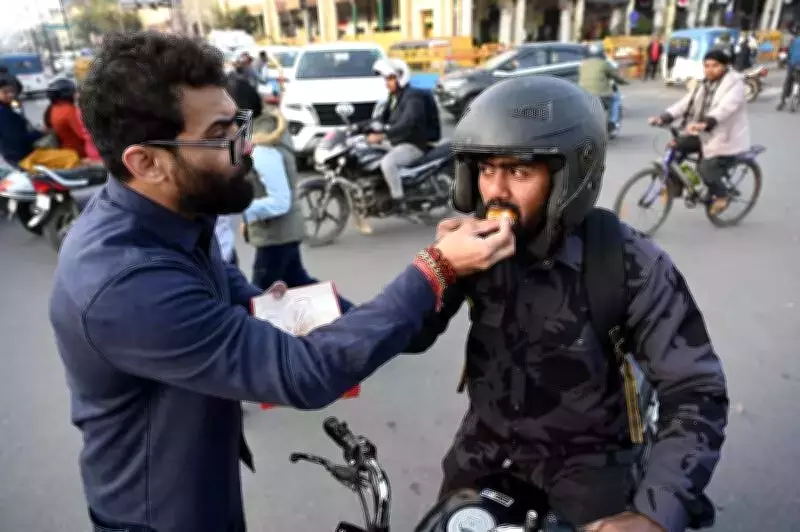
At Lucknow University, visible celebrations erupted immediately following the court's announcement. Students embraced each other enthusiastically, distributed traditional sweets, and raised spirited chants of 'Student Unity Zindabad' across campus grounds. The atmosphere reflected widespread relief among those who had expressed concerns about the regulations' implementation.
Vivek Mishra, a Bachelor of Arts student at Lucknow University, articulated the prevailing sentiment among many general category students: "This stay provides crucial time for proper examination of the UGC regulations. We need clear provisions that protect students against false complaints, with actions taken only after thorough, impartial investigations."

Student political organizations echoed similar perspectives. Jatin Shukla of the Akhil Bharatiya Vidyarthi Parishad emphasized that "the court's decision demonstrates that student concerns receive serious consideration. The guidelines require careful review to ensure they are unambiguous, practical, and acceptable across all student communities."
Concerns About Protection Delays and Implementation
Conversely, students from historically marginalized communities voiced significant worries about the practical implications of the judicial stay. Amitesh Pal, a Master of Arts student in Political Science, described the development as "deeply disappointing," noting that "these regulations were specifically designed to protect the fundamental rights of SC/ST and OBC students within educational institutions."
Mohit Kumar, a History student, characterized the court's decision as "a substantial setback for marginalized communities." He stressed that "any review process must not indefinitely postpone essential protections for vulnerable student groups. Revised guidelines should be implemented promptly without unnecessary bureaucratic delays."
Student Leaders Call for Dialogue and Clarity
Across the political spectrum, student representatives emphasized the need for transparent consultation processes. Vishal Singh of the National Students' Union of India asserted that "policies affecting campus environments should never be implemented without comprehensive discussion and complete transparency. The regulations require revision based on genuine feedback from both students and faculty members."
From Allahabad University, Dheeraj Pandey interpreted the court order as "a victory for authentic equality," explaining that "the stay addresses concerns about vague provisions potentially open to misuse, while explicitly clarifying that protections for SC/ST, OBC, and Persons with Disabilities remain unaffected."
Systemic Challenges and Future Directions
Ajay Yadav Samrat, an OBC student from Allahabad University, expressed respect for the judicial process while highlighting persistent challenges: "We must acknowledge the systemic discrimination that OBC and SC/ST students continue facing on campuses nationwide. Any regulatory framework must address these structural issues effectively."
Prince Prakash, another Lucknow University student, proposed an alternative approach: "Rather than creating regulations that might inadvertently divide student communities, we need provisions enabling collective student voices against administrative injustices while ensuring greater institutional accountability."

Appeals for Campus Harmony and Balanced Regulations
The Akhil Bharatiya Vidyarthi Parishad welcomed the court's directive while appealing for continued campus harmony. Virendra Singh Solanki, ABVP's national general secretary, reaffirmed the organization's commitment to "equity, harmony, and equal opportunities within educational spaces." He cautioned that "regulations lacking clarity and balance can generate confusion and dissatisfaction among student populations."
The divergent reactions underscore the complex balancing act required in formulating campus equity policies that protect vulnerable groups while maintaining educational environments conducive to all students' growth and development.