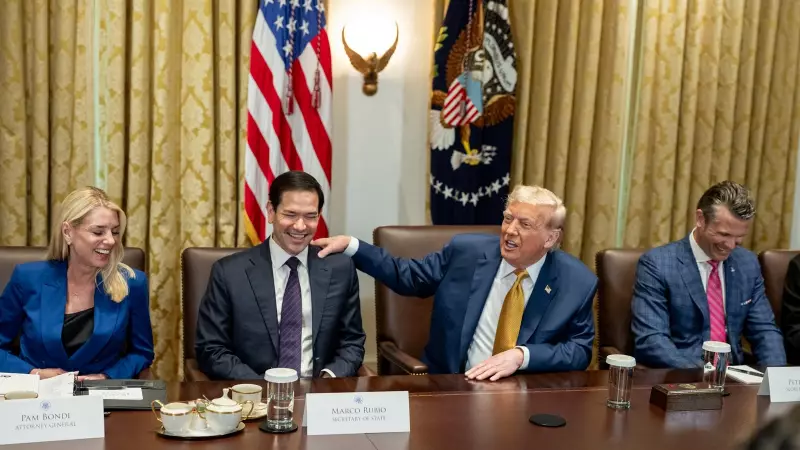
A cryptic social media post by US Senator Marco Rubio about Cuba's president, which was subsequently reshared by former President Donald Trump, has ignited a fresh wave of political speculation and analysis. The incident, unfolding on the platform X, ties together US-Cuba relations and the looming 2024 US presidential election, offering a glimpse into potential foreign policy postures.
The Viral Exchange That Caught Trump's Eye
The chain of events began when Senator Marco Rubio, a Florida Republican known for his hardline stance against Cuba's communist government, posted a seemingly innocuous yet pointed message. He wrote, "The President of Cuba is an illegitimate dictator who was not elected by anyone." Rubio attached an old video clip showing Cuban President Miguel Díaz-Canel stumbling while walking up a short flight of stairs during an official event.
This post, blending political condemnation with a moment of physical mishap, quickly gained traction. Its significance multiplied when former President Donald Trump reshared it on his own Truth Social account, amplifying it to his vast follower base. Trump's repost, devoid of any additional commentary, was interpreted by many as a tacit endorsement of Rubio's sentiment and a signal to his supporters.

Decoding the Political Message and Timing
Analysts were quick to dissect the layers within this digital interaction. Firstly, Rubio's description of Díaz-Canel as an "illegitimate dictator" directly challenges the legitimacy of Cuba's single-party political system. This rhetoric is central to the longstanding US position and remains a potent issue for the influential Cuban-American voter bloc in the critical swing state of Florida.
Secondly, the reshare by Donald Trump is seen as highly strategic. By aligning himself with Rubio's message, Trump reinforces his image as a steadfast opponent of socialist and communist regimes—a consistent theme in his political branding. This move is perceived as an effort to solidify support among conservative voters who prioritize a tough stance on nations like Cuba, Venezuela, and Nicaragua.
The timing is also crucial, occurring amidst the heated campaign for the 2024 Republican presidential nomination. The gesture strengthens the alliance between Trump and Rubio, who is now a key congressional ally, and serves as a stark contrast to the policies of the current Biden administration. President Joe Biden has reversed some Trump-era restrictions on Cuba, easing remittance flows and travel, a shift criticized by Republicans.
Reactions and Wider Implications
The online episode did not go unnoticed in diplomatic circles. While the Cuban government has not issued an official statement regarding these specific posts, state-aligned media often dismisses such criticisms as interference from "imperialist" forces. The incident underscores the deeply entrenched and adversarial nature of the relationship, which remains largely frozen despite occasional thaws.
Domestically, the reshare has fueled discussions about Trump's potential foreign policy approach should he return to the White House. It signals a likely return to the maximum-pressure tactics that characterized his first term, including stricter sanctions and diplomatic isolation of Havana. For voters in Florida, this is a clear marker of political alignment.
Furthermore, the use of social media as a primary tool for diplomatic signaling continues to redefine political communication. A single post or reshare can now articulate a complex policy stance, rally a base, and provoke international reaction within minutes. This event exemplifies how platforms like X are leveraged for real-time political maneuvering and narrative setting.
In conclusion, what appeared as a simple social media interaction is, in fact, a microcosm of larger geopolitical and electoral battles. The Rubio-Trump exchange on Cuba reinforces existing political divides, highlights the strategic importance of Florida, and previews the foreign policy contrasts that will be central to the 2024 election campaign. As the race intensifies, such symbolic gestures are likely to become more frequent, each carrying weighty implications for both domestic politics and international relations.