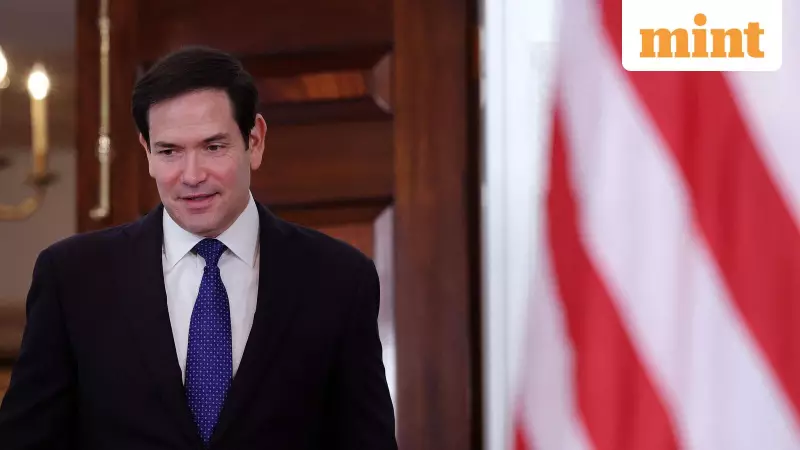
In a closed-door briefing to US lawmakers, Secretary of State Marco Rubio clarified that the Trump administration's ultimate objective regarding Greenland is a negotiated purchase from Denmark, not a military invasion. This comes amidst a series of increasingly aggressive public statements from the White House about controlling the strategic Arctic island.
Clarifying Intent Amidst Belligerent Rhetoric
The briefing, held on Monday, January 5, 2026, included top officials like Defense Secretary Pete Hegseth and Joint Chiefs Chair General Dan Caine. According to people familiar with the discussions, Rubio did most of the talking, aiming to address concerns following a recent US military operation in Venezuela. The session was primarily about the capture of Venezuelan President Nicolás Maduro, but questions about other potential military actions arose.
Senate Minority Leader Chuck Schumer reportedly asked if the administration planned to use force in other regions, specifically mentioning Mexico and Greenland. In response, Rubio played down the possibility of a US seizure of Greenland by force. This stance contrasts with public comments from other senior figures. White House press secretary Karoline Leavitt had stated that utilising the US military is always an option for the commander in chief, while senior aide Stephen Miller, in a CNN interview, refused to rule out an invasion, claiming, "Nobody's going to fight the United States militarily over the future of Greenland."

Denmark and NATO's Stark Warning
The Trump administration has long signalled its desire to acquire Greenland, the world's largest island, citing national security and critical mineral access. President Trump insists control is vital to safeguard the Arctic against rivals like Russia and China. However, the Danish government and its allies have reacted with alarm and firm resistance.
Danish Prime Minister Mette Frederiksen was unequivocal, telling broadcaster DR that an attack by one NATO country on another would cause the alliance to collapse. "The international community as we know it, democratic rules of the game, NATO, the world's strongest defensive alliance—all of that would collapse," she stated. This warning was echoed in an unusual joint statement by six other European leaders, urging the US to work collectively with allies on Arctic security.
Denmark has attempted to address US concerns by offering expanded troop basing rights and improved mining access in Greenland, alongside investments in the island's security infrastructure. Trump dismissed these efforts, deriding them as Copenhagen effectively buying "one more dog sled."
Domestic and International Repercussions
Within the US, reactions are mixed. Senator Lindsey Graham, a key Trump ally, framed the administration's posture as a negotiation tactic. "We need to have the legal control and the legal protections to justify building the place up and putting our people on the ground," he said. However, the administration's recent military actions in Venezuela, Nigeria, and Iran have left some US lawmakers and European officials concerned that President Trump is more willing to use force than ever before.
Ultimately, a significant obstacle remains public opinion in Greenland itself, where polling shows most residents oppose becoming part of the United States. The situation presents a delicate diplomatic crisis, pitting a US push for strategic assets against the foundational principles of the NATO alliance and the sovereignty of a close partner.